Monday, 25 March 2024

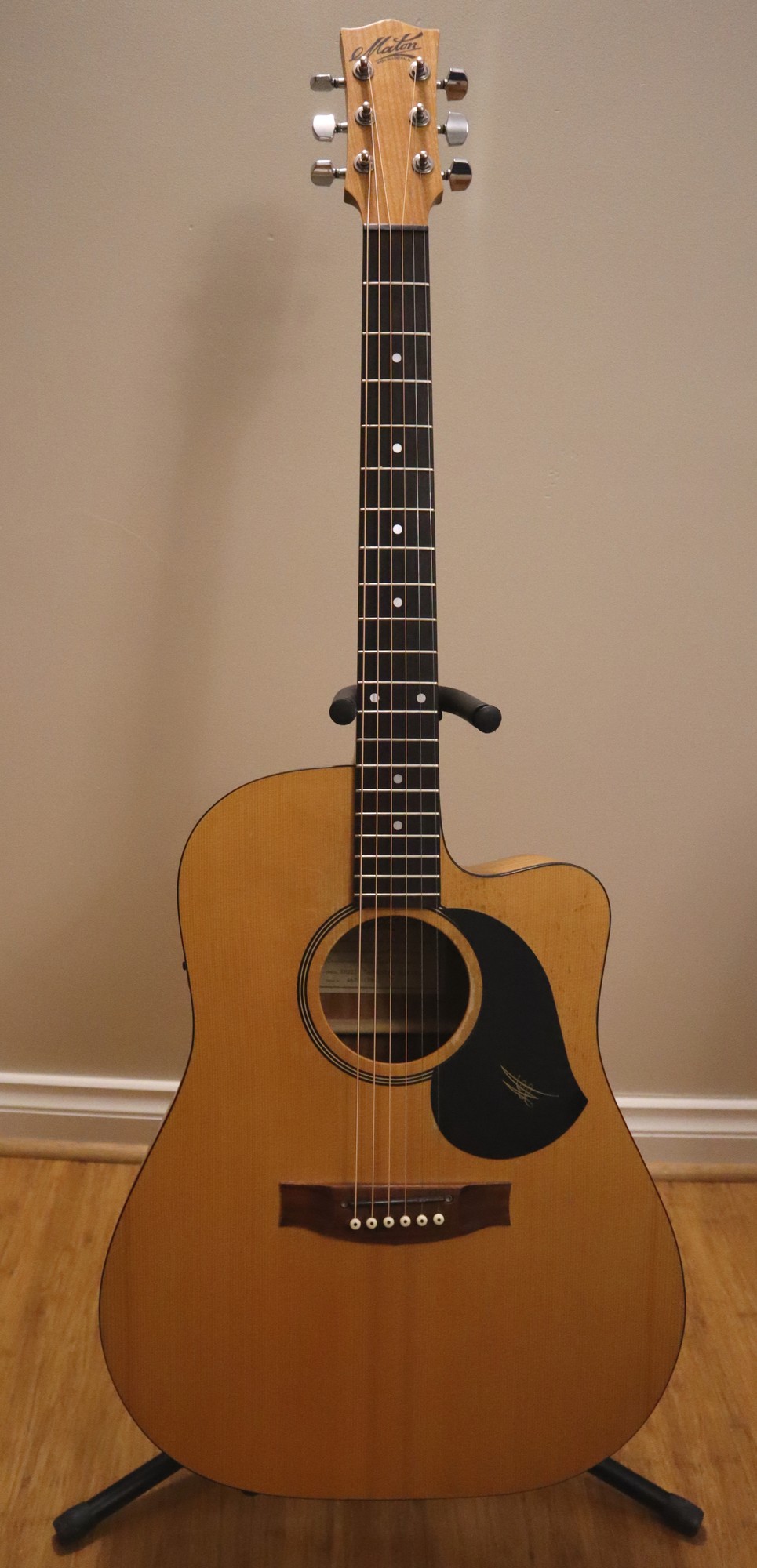
Maton EM225C

I don't talk about this guitar much, I have a love/hate relationship with it. Which is a shame, because I've been through a lot with it.

I bought it new in 1997, a Maton EM225C, I'd never owned a steel string acoustic before. I can't even remember why I bought it, I think it was a case of "working near a music shop, play some guitars at lunchtime from time to time, fell in love with one." It's the guitar I used for my highest viewed songs on Youtube with millions of views between them. It's the guitar I had when I discovered Tommy Emmanuel, which permanently changed the course of my guitar life. It's the guitar that I hung on the wall for 10 years when I realised that I prefer pretty much everything about nylon string guitars. But it is also the guitar I play regularly, with a plectrum, in the band at my local church, because that's the sound they need.

Since it was the only guitar I played for 10 years, it had suffered a lot of fret wear and was getting buzzy on certain strings in certain frets. The good fellas down at Profret gave it a grind and a recrown which helped the playability. It had a lot of grooves in the usual places, now it doesn't.

I noticed however several weeks that when I was digging in hard with a pick an awful buzz had returned. Oh no! Where did that come from!? After a moment of thought I realised that I had put on a new set strings that were a slightly lighter gauge.
Acoustic guitars have a truss rod, which is fighting with the string tension to set the neck relief. If you go from heavier strings to lighter, the strings are pulling less, so the truss rod will now pull the neck further back - giving a lower action - but also potentially creating fret buzz, especially when you dig in, due to this reduction in neck relief.

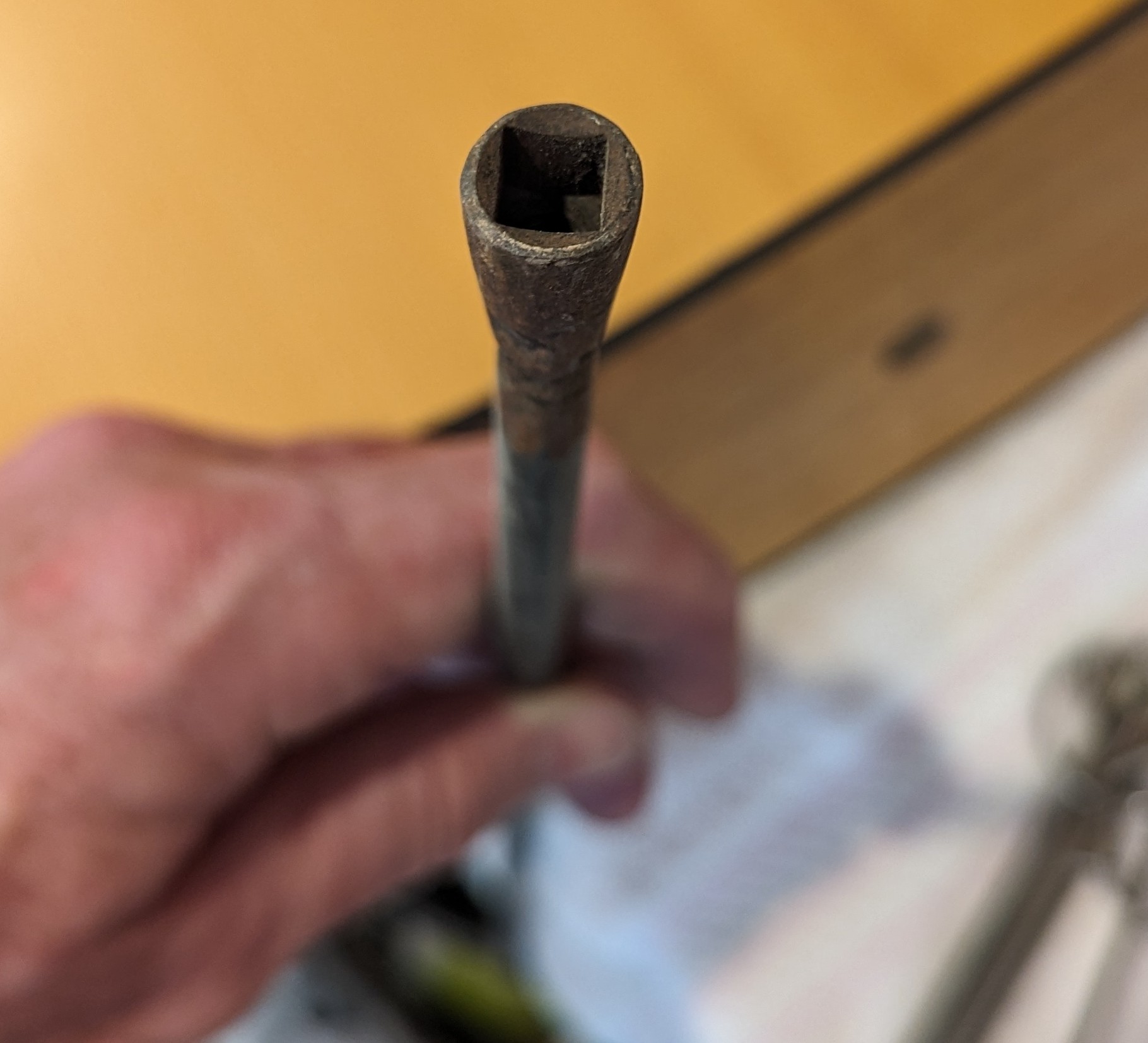
All good - years ago I worked out that the truss rod nut in a Maton is actually a 1/4" square head, so I made an adjustment tool which had an old 1/4" drive socket welded back-to-front on a length of steel rod, and a T handle for twisting. You whip the 7/16th hex head end pin, stick the tool in there and twist. Lefty Loosey Righty Tighty, leave the strings on, retune between adjustments.

This tool is handy for getting afeel of what your fretboard is doing. If you look closely you can see the neck relief (the bow of the neck) starting from up at the nut. That's what you want, juuust enough neck relief that there isn't any buzz when you are digging in as hard as you ever go.
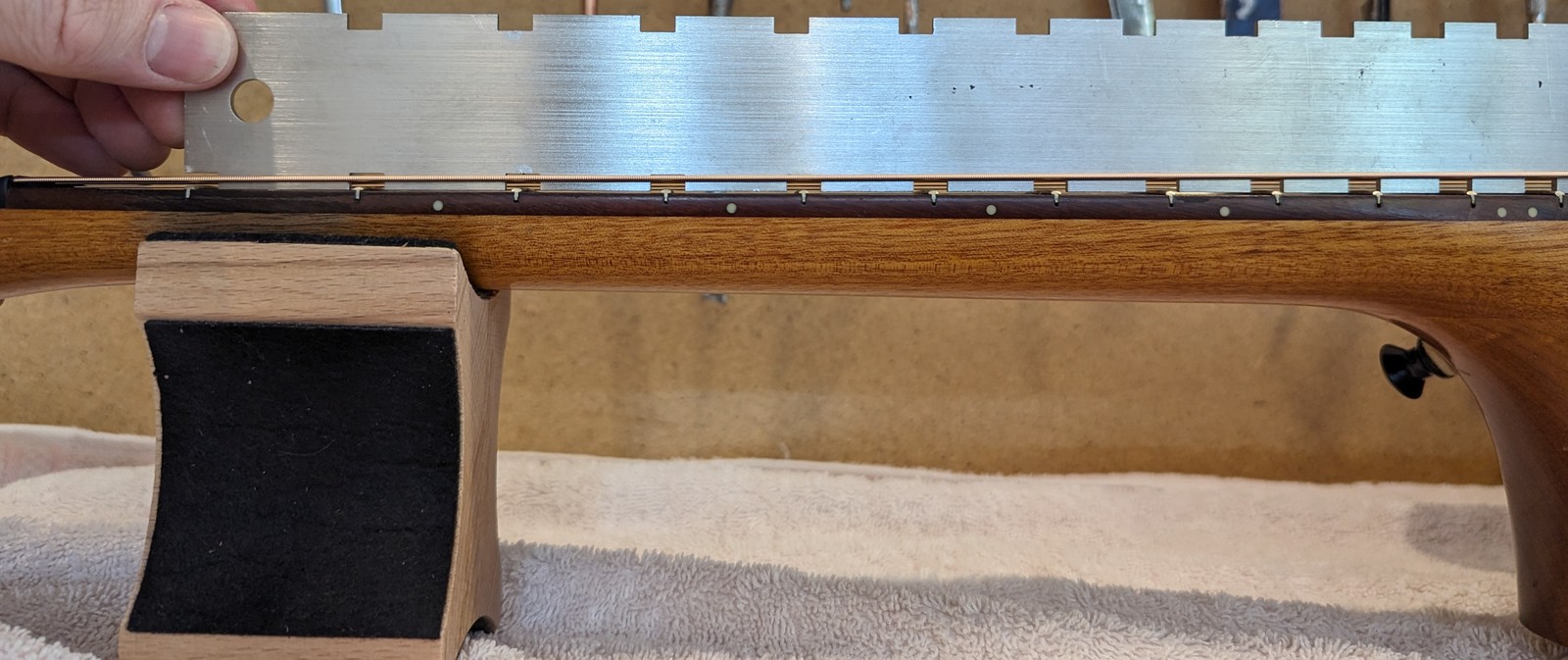
This multipurpose guitar measuring tool also came in super handy for checking measurements, accurate to 1/4mm. I adjusted out a half, strummed heavily, still heard a little bit of buzz. Kept adjusting and tuning until it seemed better. I can be very heavy handed with a pick, so I need the action to be quite high.

Where does the buzz come from? The string ever-so-slightly rattling on the fretwire one fret up. So imagine you've fretted a note, so the string is pressed up against the fret you are at, there is a small gap between the next fret up and the string. As you pluck, espcially when you are heavy handed, at that initial attack on the string it will just slightly contact the fret up for a short period of time, which gives that buzz.

This can also happen from the other end, with the nut. That is only when you are playing an open note though, if the nut is so worn down you are getting the same issue but on the first fret. I had this problem on my Esteve a while back
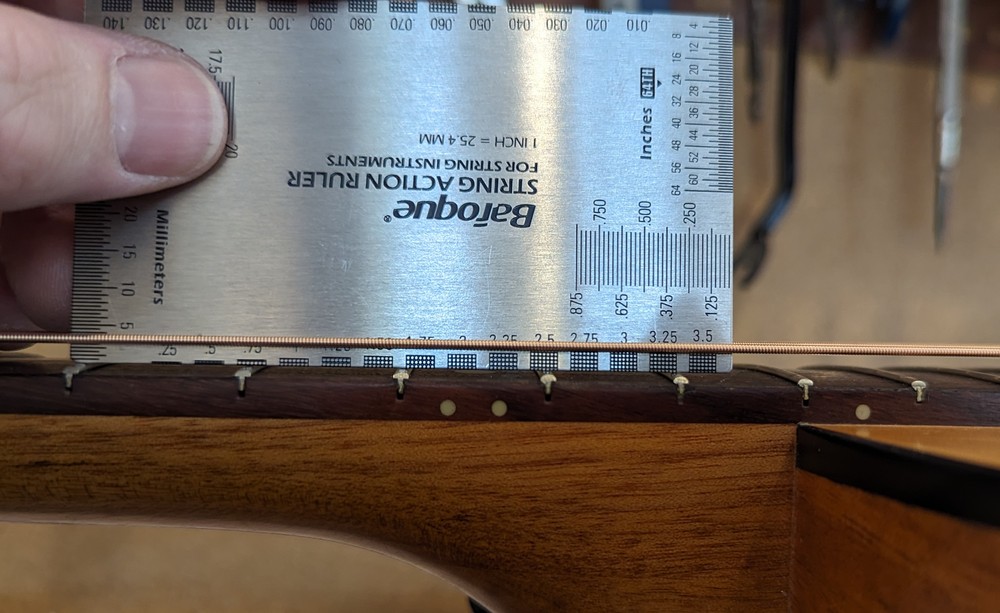
Make sure have your tuner handy. Adjust the truss nut at string tension, small amounts at a time, retune between adjustments.
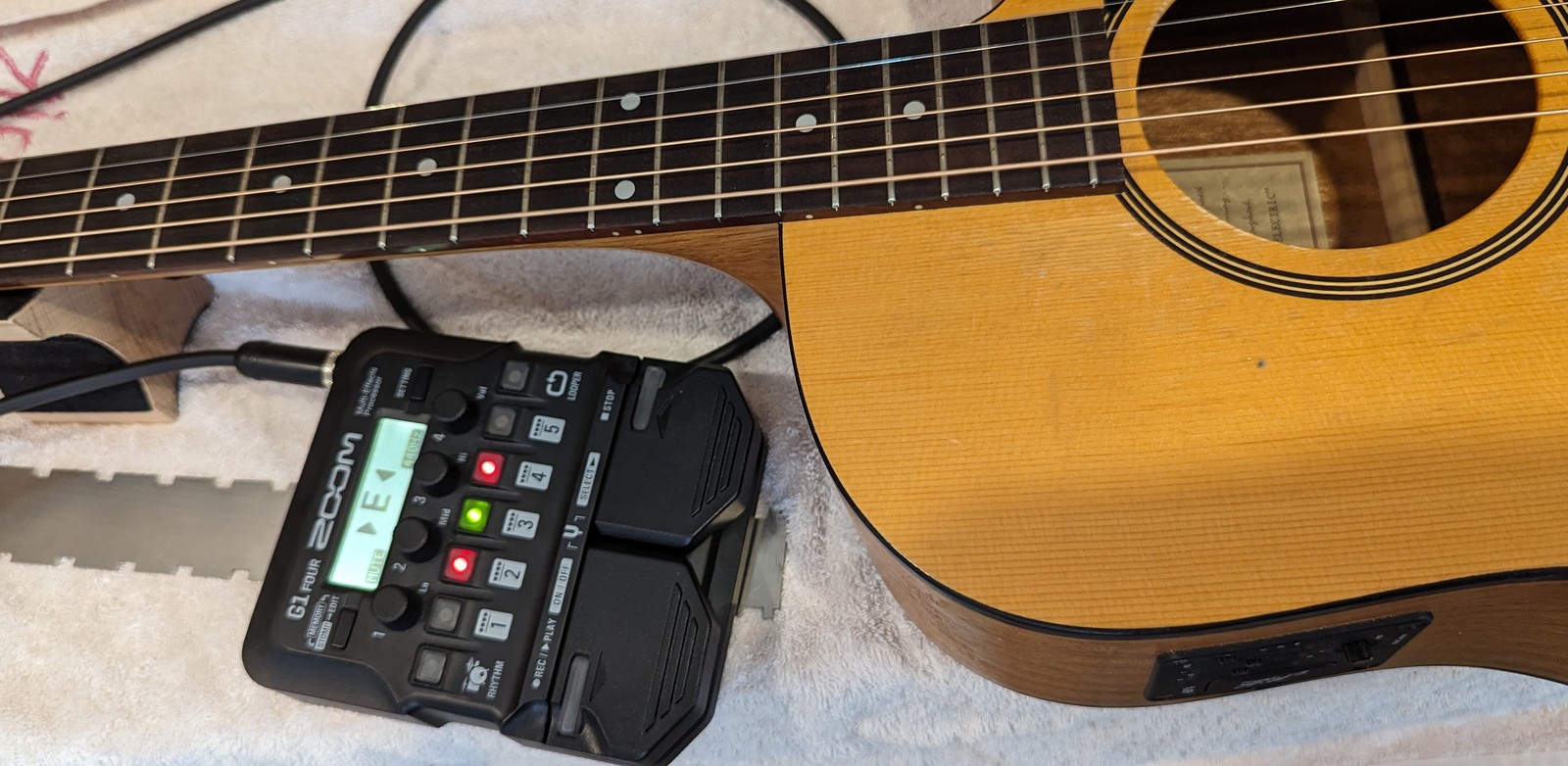
I played the next gig, but I was still hearing a little bit of buzz remaining. But the truss rod was already backed out to the point that removing more tension was not doing anything! What that means is the strings aren't heavy enough to pull the neck out for enough relief, even with the truss rod offering no resistance. If that happens, the next attempt at a cure is saddle adjustment.

If you can put some more meat back onto your saddle, then the string is up a bit higher from way down at the bridge, so there is a bit more action, the buzz may go away. It's just amazing, we are talking tenths of a millimetre between the string and the fret for the difference between clean sounds and buzz. And it might only buzz on particular strings at particular frets.

There are two ways to add meat to your saddle; super glue + bicarb soda to build the level up is my favourite, or reach into your bag of bone blanks and carve another one. I've done both in the past, this time I went with make a new bone saddle, the original black plastic one had served its purpose.

Since the existing saddle is pretty close in dimensions, I traced the outline of it onto a new saddle blank with a bit extra and ground it out with my die grinder. It's pretty quick to rough it out, then smooth off the corners with sandpaper, working through the grades. Yep, I do finish on 1200 grit and then polish with a bit of metal polish or whatever you have. Bone does polish to a mirror finish, it's quite amazing.
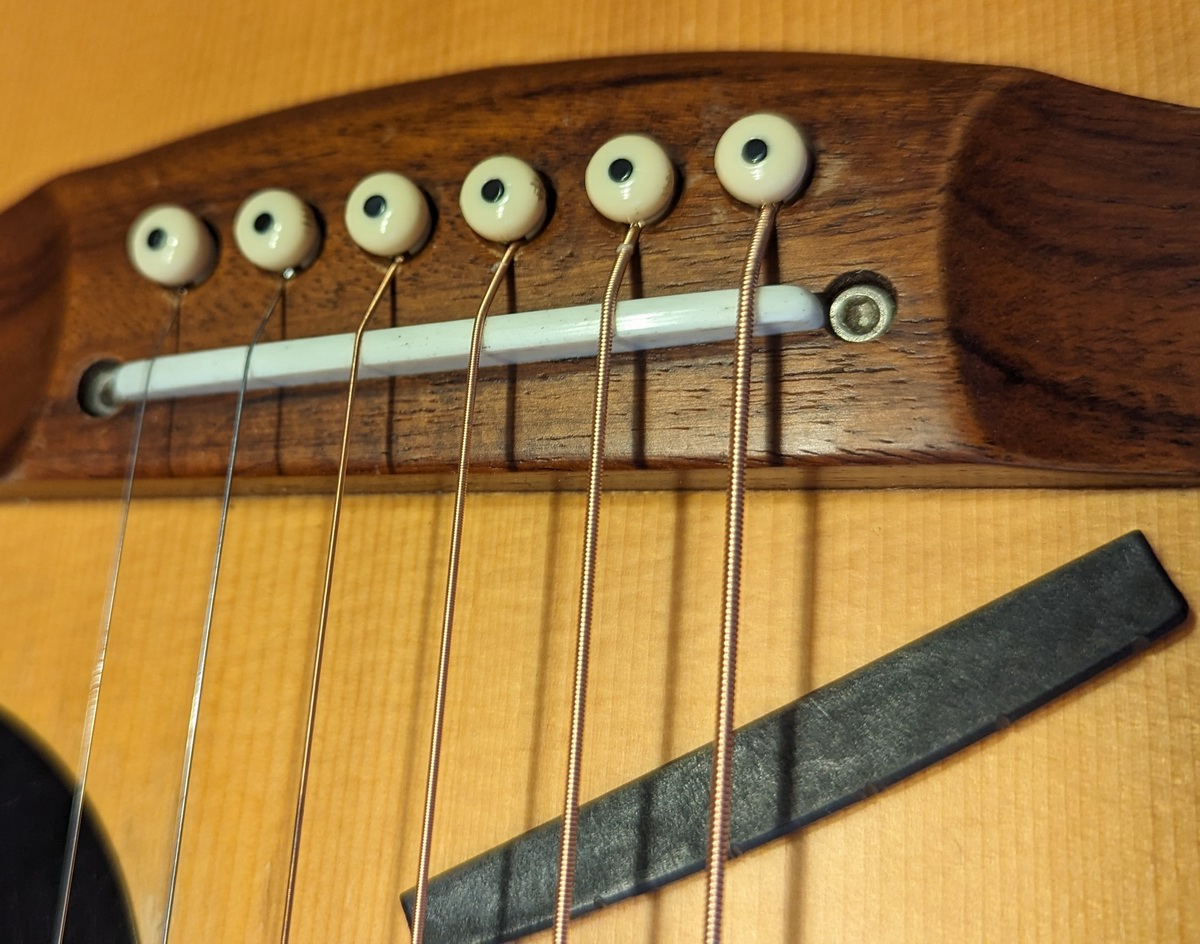
I popped it back in and loosely restrung it. I then marked where the strings were, and filed some little grooves in the back. So the strings won't move from side to side when I wildly strum. I got out my caliper to make sure the distances between the stings were fairly constant. Looking at my old saddle, there were some deep grooves in there, I guess 10+ years of hard playing will wear down a saddle just enough that a change of string tension will introduce buzz.

Retuning and strumming hard, I couldn't get any buzz. Yah! Which meant I could wind some tension back on to the truss rod. I watched carefully with my string action gauge at the 12th fret as I put tension back on. When I got down to around 3.25mm I could hear the buzz coming back. At 3.75mm it was pretty clean, so I left it at that. Around 1.5 hours from getting started to finishing, so it's not a super lengthy job to whip up a new saddle.

At my next gig I didn't hear any buzz! Yay, problem solved! Good luck out there!

JAW

Saturday, 23 March 2024

Fingerstyle Influences

We are all influenced by music, but further to that, we are influenced by artists, and even further to that we are influenced by artists who play in a style that we'd like to emulate. There are ways to get into fingerstyle and my path started with simply learning classical guitar from the Aaron Shearer Red Book and learning how to strum various chords along with music I liked, but there were three artists that really inspired me - Tommy Emmanuel, Michael Chapdelaine and Naudo Rodrigues.

Tommy was a great starting point, through him in the late '90s I discovered thumb independence which is the backbone of fingerstyle. I've seen Tommy in concert, he's such a good showman too. I did some  of his covers back in the day. With the advent of Youtube in 2005 it got a lot easier to discover other fingerstyle artists which is where I found Michael Chapdelaine. He had a slightly different approach to fingerstyle, that seemed to be born out of classical guitar, which resonated with me more than Tommy, because that is where I too was coming from. I covered his covers of "California Dreamin'" and "Come Together".

But then it was Naudo Rodrigues who I connected with on a guitar level the most, I transcribed/re-covered many of his covers, and still do from time to time. After Naudo's influence I was at a stage where I was doing my own arrangements, my fingerstyle was basically set in motion and rather than needing to play exactly what these artists were playing, I was doing my own stuff.

Artists who influence are pivotal to anyone's musical journey, which is why I was saddened to hear from my internet mate L3fty that Michael died late last year. A friend of his wrote some moving words about him, I wasn't surprised to hear he was a troubled soul. The perfectionism you could hear in Michael's playing was both fantastic and yet deflating. It was the contrast between Michael and Naudo that was freeing for me - Michael wasn't only note perfect, he was dynamics and inflection note perfect. You can hear errors in Naudos playing and that makes his style more relatable to me. I don't want to know how to play 3 songs perfectly, I want to know how to play 100 songs adequately.

And yet, it is the striving for perfection that pushes us to new found guitar heights, but it is a balance. So thanks Michael!

...it reminded me that I once has some correspondence with him.  I dug around and found it deep in my archives. I had covered his "Come Together" and had written up a tab and then did a video where I talked about how to play it and added a link to my tab. He asked me to take it down because he was planning on making his own tab and tutorial. I did, and then let him know, and he got back to me:

28 Nov 2007

hi Jason:
thanks very much for honoring my request.
i would love to see your performance of the tune on so i don't mind if you publish it on the youtube. it was just the teaching part that was a problem.
you are a good man and a very good guitarist.
thanks again for digging my stuff.
hope we get to play together one day.
tu amigo.

michael

Saturday, 10 February 2024

What's happening Feburary 2024

Musically busy times!

  • Over the Christmas break, I attempted to record the whole song "Wish You Were Here". Which I did! Except the singing! I featured myself on my new 12 string Gretsch and myself on my Maton 6 string acoustic, myself on the double bass, and because I'm a weak drummer I sequenced the drums...myself. It all sounds great! But after several attempts at trying to sing the song, even with pitch correction, I just wasn't satisfied.

    Luckily my youngest daughter, who can sing, felt sorry for me and has started giving me some lessons. She worked out my range is from C2 to C4 which is a shame because the song starts on C4. Yes, I did trying singing it an octave down, I didn't like it.

    But after a good warm up, and working up from notes in my range, I could hit the D4 and E4 the song requires, with almost no hint of straining, so I am going to tackle it again. I've already made a how-I-made-this video, everything is ready to go, I just need the singing! I have planned a harmony, which would be nice if was a high harmony, so I can either sing it an octave down instead or enlist my daughter to do it. I wanted it to be a video of "I made this by myself", maybe to inspire others who were thinking about doing something similar, but also it would be nice to have my daughter sing on there with me. Or she sings the whole thing!

  • Since I was revisiting "Wish You Were Here" I found some fantastic resolves with beautiful colours for my fingerstyle version, so I have been updating that arrangement. Some stuff I can't believe I had never noticed before. I've always meant my arrangements to be works in progress, as my skills develop, as my ear develops, so to add additional complexity and texture to an arrangement is how to keep the passion alive.

  • Speaking of tabs, I have finalised notifying all my Patreon Supporters that I would not longer be putting tabs on Patreon, instead everything is moving to PaidTabs. This fixes 3 issues I had with providing tabs on Patreon:
    1. It's not really legal, there is no royalty payment to copyright holders. While I could dress it up as "supporting me but hey here are some tabs for free"...yeah nah.
    2. The more tabs I put there the less value each one was. In the early days you could subscribe for $3, take the 10 tabs there, unsubscribe, okay! But the final tab I gave out to my supporters took the total to 35. So less than 10c per tab. Of course it is better to sell them individually. I don't want to be "one of those people" who is ruining it for struggling musicians trying to carve out a living while I'm living a great life with my day job and music is my hobby.
    3. I was starting to feel a burden to create tabs for my Patreon supporters. That I needed to hurry up and realease another tab "it's been 3 months already!" I like working on other musical projects in between arranging new songs for fingerstyle guitar. I don't want to create an expectation that I'm going to create an arrangement every 2 months on the dot. That's how you burn out.

  • ...so I'm updating my tabs again and releasing them on PaidTabs. I've got more then 10 on there now, people are buying them so that's nice. It takes me at least an hour to update a tab depending on what state it is in - I want them to be execptional - so I just need to keep working through my catalogue...only around 70 to go...

  • At work the marketing team attempted to put an in house rock band together for a campaign promotion. They reached out to a bunch of people including me, I guess with a few thousand people in an organisation there would be quite a number of musos...and there was...and most of them were unavailable for the launch date. I mentioned that "If you are going to have a rock band you need a lead singer" and that if you can't pull anything together then I can play some rockier fingerstyle on the day, that's easy for me.

    They were unable to secure any of the singers.

    One of the guys who works in my team is a drummer, so I dragged him over the other weekend and got him to play along with some of my fingerstyle. I have played with drummers many times in the past and it's always good...except for my ability to keep tempo. But with a few years of playing in my local church band I reckon I have improved. We managed to bash out around 10 songs in just over an hour that we thought we could do, it's only an hour's gig. He was happy enough to play on my little electric drum kit, so I'll be able to pack up my PA, mixing desk, drumkit and guitar and a bunch of cables and ship it to work.

    It shall be fun :-)

Wednesday, 10 January 2024

Double Bass Bridge

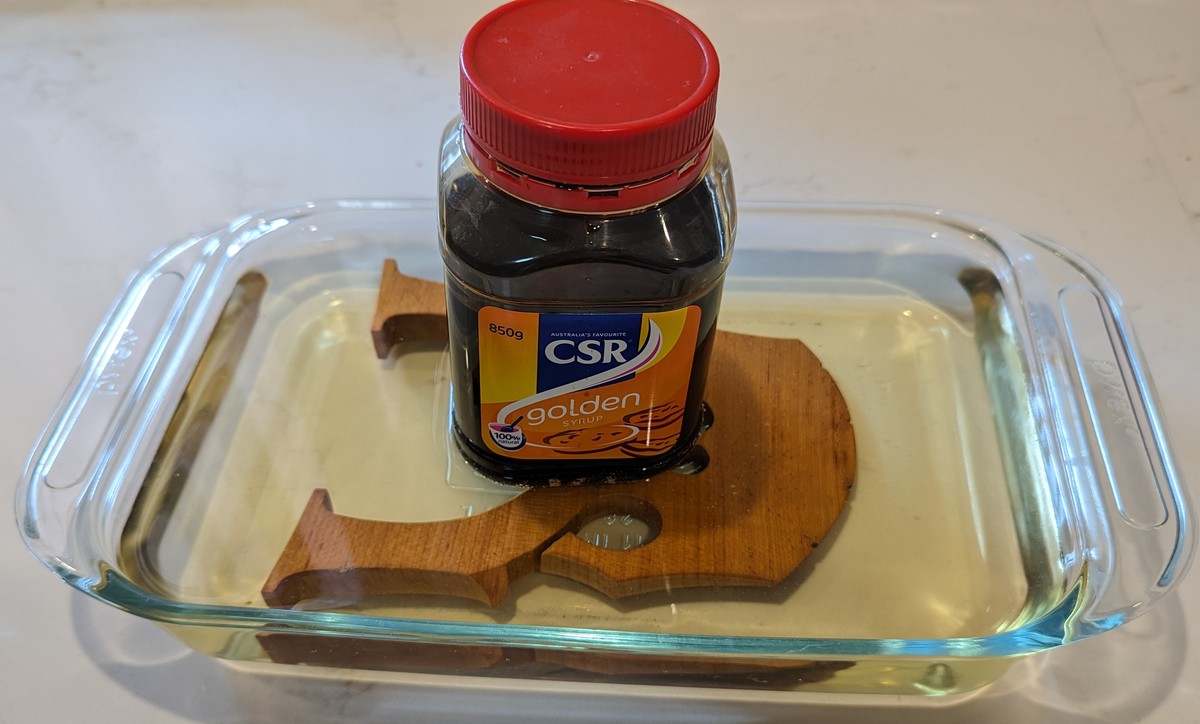
First, let's have some background to this photo.

Over the Christmas holidays I recorded a full song with me playing all the parts, for fun, because I can, because the DAW Reaper simplifies the process. I recorded the bass part on my double bass. I bought a double bass second hand many years ago when my eldest daughter was learning electric bass and really wanted to learn double bass. She doesn't play it anymore, there has been talk about selling it - they kinda take up a lot of room - but I love the sound of it and any excuse to play it will do.

Over the years the bridge has warped. I had bought a new bridge and figured I would carve a new one like I carved the cello bridge...but it would take me probably a day of effort to do. And there was nothing wrong with the existing one, just warped, which was putting the intonation out. Ha, not that my ability to fret on a fretless bass hinges on perfect intonation!

So I decided to try un-warping the bridge.

I removed it and put it in a dish of water. Of course wood floats, so I put the first water proof thing I found in the pantry on it to weigh it down. Wood is an amazing thing, by the end of the day it was fully soaked and had pretty much reverted back to the original un-warped state! Like it knew what shape it should be, and soaking freed it to return to normal.

During the soak the water took on a bit of a yellow colour, possibly leached out of the wood, possibly because whoever had last used the jar of golden syrup had let a bit trickle down the side and I didn't notice and it dissolved in.

So back to the photo. My youngest daughter looks at a dish of yellowy water on the kitchen bench, recognises the double bass bridge in it, and then sees a jar of golden syrup on top. Thinks about it for a moment. "Hey dad, what's going on here, is this how you get a sweet tone from the bass?"

Bah dum dum.

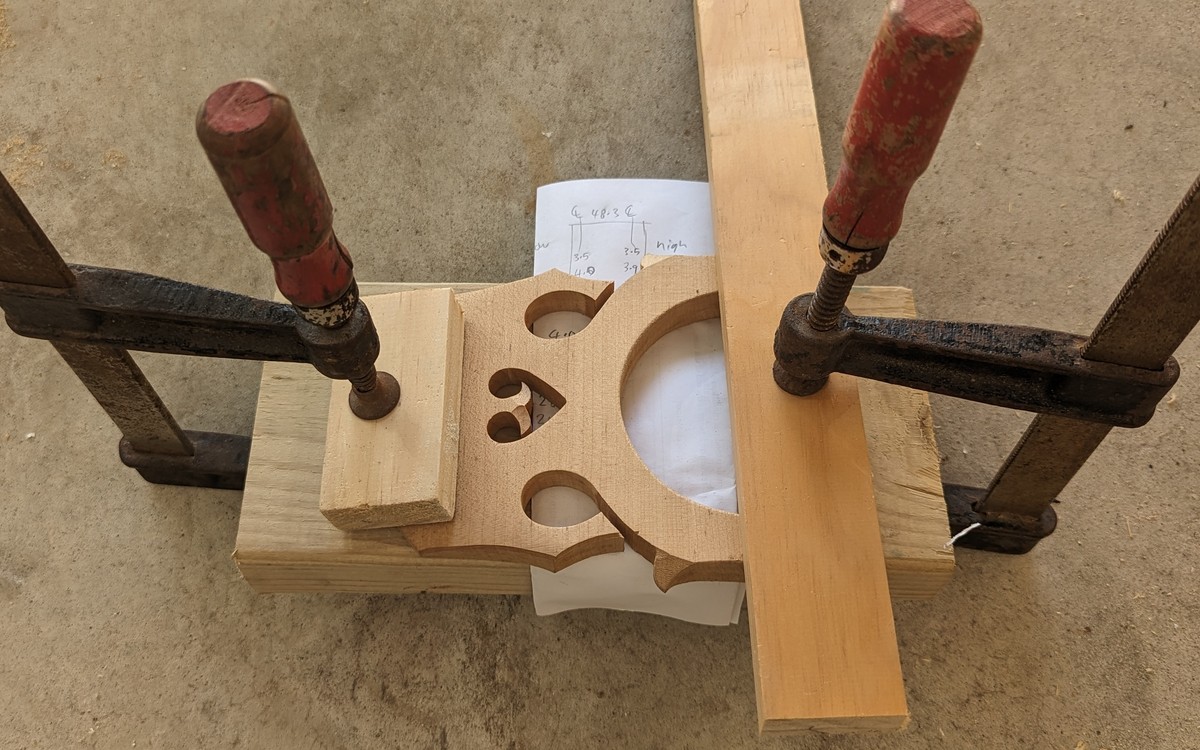
After I removed it from the water I clamped it to dry just in case it decided to go back to warped, and you can see from the photo I slipped a bit of folded paper underneath to give it a tiny bit of pre-load anti-re-warping; thinking if I pre-skew the direction of force it might be a bit more stable. One week later, fully dried, back on the bass, success!

Wednesday, 13 December 2023

PaidTabs

While still discussing what to do with my large collection of music cover arrangements I have produced over the past nearly 2 decades, my longest supporting mate on Patreon remarked 'Paid Tabs, seems to be where people are selling their arrangements' (thanks Mark). Dumbfoundedly, I went there, and sure enough, it is a website where you can sell arrangements of covers - and they look after the copyright holders. Their fee is only 20%, which is much better than Hal Leonard's 90%...makes me raise an eyebrow, how one can be so expensive and one so cheap, but I don't understand the inner workings of royalties, who am I to argue! Besides, I saw scores there from Paul Davids, Davie504, Igor Presnyakov - and I'm not going to argue with those legends!

So, finally, I have a place to legitimately park all my arrangements and sell them and copyright holders are looked after. This is what I had planned all along, and while waiting for this day to arrive I have used Patreon as a method to kinda/kinda not sell my arrangements, as of today there were 33 available to anyone who became a paid sub. That's pretty good value, I set the PaidTabs at $5.00 each which is the lowest you can go, so as good a value as you can get. I'm going to stop letting them go out the door through Patreon (I did discuss selling arrangements with Patreon and gave them a few months to think about whether they would offer a similar service...not going to happen in the near future.)

For all my existing Patreon friends, rather than just shut down the tab memberships, I have stood up two new memberships, which I have called "Basic Set" and "Fancy Set". Being $1 a month and $2 a month, where $1 a month is enough to buy a basic set of strings each year, at $2 I can get a fancy set of D'Addario coated strings! I've had plenty of Patreons who sign up, take everything and leave after a month, that was fine, I get it, but I've also got Patreons who simply want to support me. And I love that, it does inspire me!

So if you are a Patreon of mine and want to keep supporting me even if you aren't getting tabs anymore, head over to my Patreon page and change your tier to Basic Set or Fancy Set, as sometime in the next week or two I will be closing down the tab memberships.

Sorry if this disappoints you, I had mentioned this would happen sometime, I hope you had a good run while it lasted. Thanks for being here! If you do move across to the new tier, thanks for staying with me! I will keep posting stuff that interests me and maybe you, I just won't be posting tabs anymore.

In the meantime I have around 90 arrangements I need to get up to scratch and post to PaidTabs...I figure that will take me at least a year at the rate I move!

Wednesday, 22 November 2023

DAW

I'll come clean with you - in the very early 2000's a mate of mine gave me a dodgy copy of Cool Edit Pro, said "hey those recordings you are working on, try this on them". And thus started my foray into the world of DAWs (Digital Audio Workstations). By the time I realised I loved Cool Edit Pro and went to buy a license, you couldn't get it anymore, it had been bought out by Adobe. I then spent years using Audacity but I never really liked it, and kept falling back to my dodgy copy of Cool Edit Pro. The shame.

The early DAWs were all "destructive", because computers weren't powerful enough to do real time processing. But once you had your own editing process, destructive isn't really a problem, you would have revisions of the wavefiles and you could step back if you needed to. Obviously real time processing would be much better, but just to pop a bit of EQ on a guitar track isn't going to do your head in.

A few months back I grabbed a copy of a recording from the sound tech at my local church where I regularly play in the band. It was a raw 32 channel single file - straight from mics and instruments, no processing. Yeah...I needed to step 20 years into the future to mix that.

Several of my favourite YouTube artists use Ableton as their DAW, so I grabbed the demo and set about learning it. It was so foreign to me I couldn't do it. I looked up Audacity again, which does support real-time processing, and I very quickly got my 32 channel recording loaded up and started mixing it. It was pretty good! Still felt like the same old Audacity so I felt a little bit uncoordinated with it, but I pushed on.

As a side note, mixing a recording of a live mix is a universe into itself. I only know what my ears like, but after reading several articles and watching several videos about mixing, there are some basic techniques, the very first most important one being that mixing is the end of the line - production is the most important part. Let's just say that the band - which changes from week to week as there are many musicians that rotate through - is pretty good, so I'm not wasting my time mixing. But wow, 7 mics on the drumkit, were every drum mic bleeds into the other drum mics, and the drums bleed into all the vocalists mics, and the other instruments...it's a challenge!

While surfing about mixing I came across someone using Reaper, another DAW that I had used years ago but found it unintuitive to use. Because of my frustration with Ableton, and my lackluster desire for Audacity, I gave it another try. I was quickly able to stand up a recording and did some mixing just with the basic real-time processing, and wow, the mix came out sounding so much nicer than Audacity! I think the built in Reaper effects are better than the freeware effects I had downloaded for Audacity. Or perhaps I had already started getting a better ear for mixing.

So I persisted with Reaper, and it was starting to feel more natural. This is good, because I knew that there was some serious scripting power underneath the hood of Reaper, and I knew that a 32 channel mix from a live studio deck could use a lot of automation to simplify the basic tasks you will get every time you explode out the 32 channels for example delete the channels not used, name the rest, group the stereo signals back together (all 32 tracks are mono) and then apply a standard set of effects across them...yeah lots of automation.

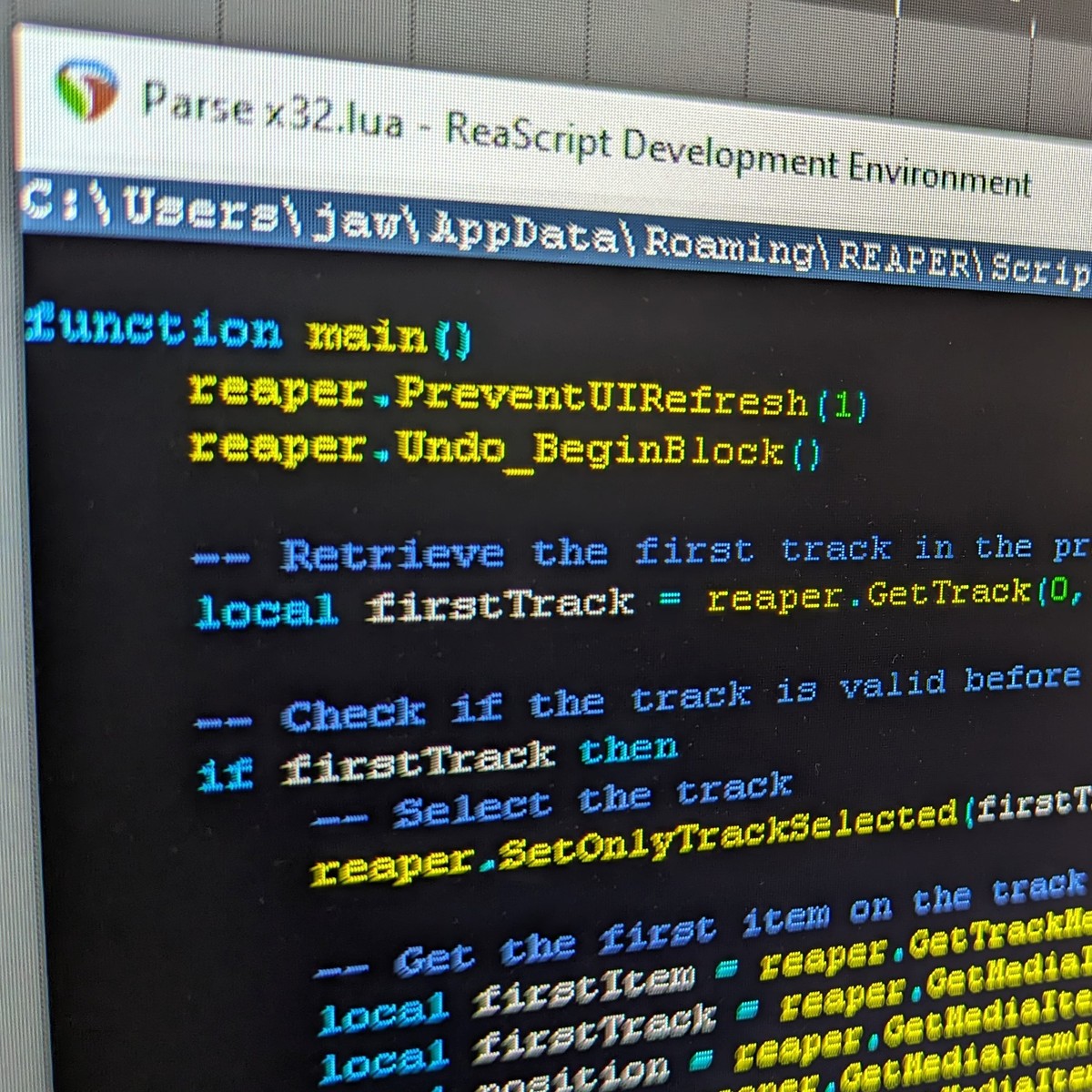
The language of choice for Reaper seems to be Lua, which I'd never heard of but is indeed a programming language. I could have used Python, or EEL2, but Lua seemed to be what they were pushing. After working out how to use the script library manager, I downloaded a few scripts to use as an example. The Lua syntax wasn't a problem - I do a fair bit of scripting in my day job - what was a problem was getting my head around all the APIs that Reaper can deal with.

Skipping forward, after about 10 hours of fumbling around, I had built up a nice script that automated all the basic tasks I wanted. It has been enough to make me commit to Reaper, even though there are still a few things that I'm uncoordinated with and seem unintuitive.

Not too pricey either, around (AUD2023)$90 one-off cost (I really dislike subscription model software).

Saturday, 28 October 2023

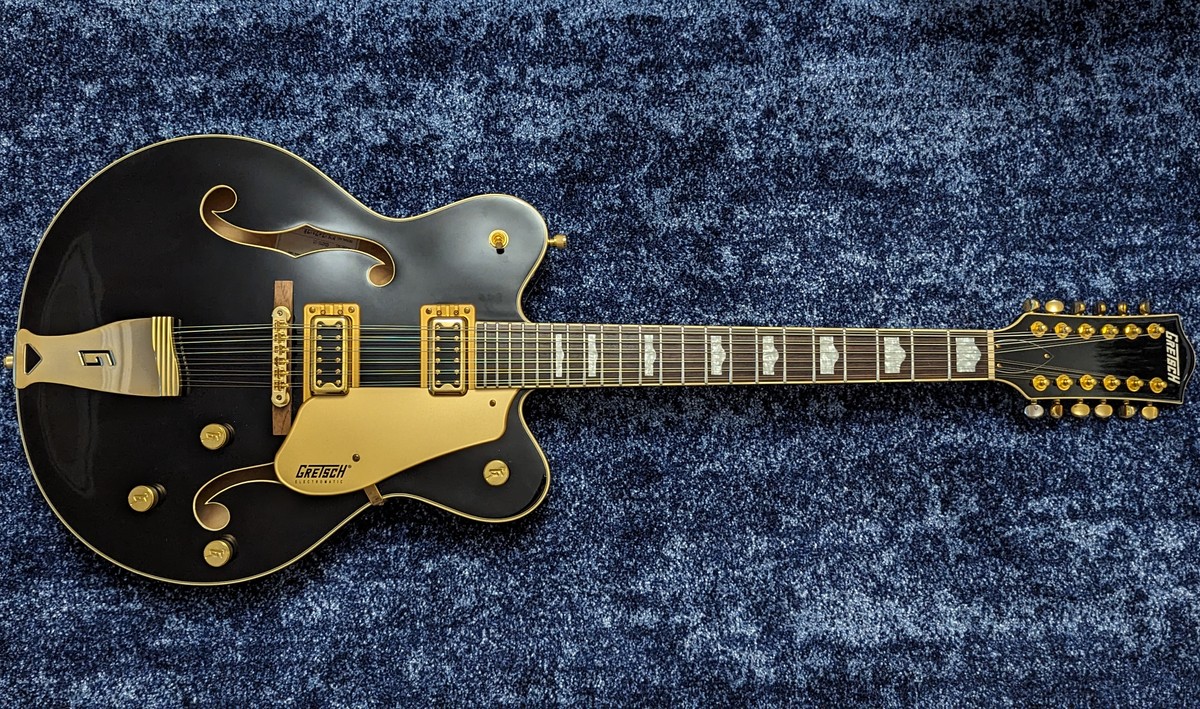
Gretsch G5422G-12

This was one of those moments when you saw something and didn't realise until then you needed it in your life.


A September 2019 Gretsch G5422G-12 twelve string guitar.


For a while now I have been arranging/practising on my electric guitar with custom neck. Mostly because it is quiet...and that comes from both being family friendly and that after 40 years of playing classical and acoustic guitars, even the unamplified sound over a practice session leaves a ringing in my ears.

And I have adapted to it. So still a wide neck for good crossover with classical guitar, but the sound is very hollow...being an unamplified electric guitar. In fact when I play my Esteve it now feels a bit weird.

Additionally, I have always wanted a 12 string.  Not really sure what I'd do with it, but every time I hold one in a music shop and strum it, it sounds amazing.

So when I saw an electric guitar (quiet for practice), but hollow body (so not too quiet, has an acoustic feel), with 12 strings (who doesn't want one!) which brings a wide neck, I realised I needed it.

It was at my local pawn shop, and interestingly they also had a 1981 SG double neck 12/6 string, which had a price tag of AUD(2023)$15,000. Interesting they bought it and think that they will be able to move it. There must be rich people out there who buy stuff like that!

They wanted AUD(2023)$995 for the Gretsch, after a moment of haggling I walked out with it for AUD(2023)$820. You can still buy them new for AUD(2023)$1500, this one was as-new condition so, fair enough. At the time it had only 6 strings wound on it, so on my way home I grabbed a set of Elixirs for it, which I have been really liking for acoustics. AUD(2023)$45 for a set, I figure they will last me many months.

Not much to tidy up on it, I took the strings off it, steel wool'd the frets, oiled the fretboard, polished the metal parts, cleaned the body, put the strings on.  I'd never strung a 12 before, I had to read up about it! I knew that the top E and B were unison, and that the bottom 4 were all octaves, but I tells ya, tuning the octave G, 9 thou, I was wincing expecting it to snap!  After stretching and bedding them in, I was getting a feel for which winder is which, it gets easy pretty quick.  Still a lot of tuning though!

I was impressed with the intonation! I only had to adjust 3 of the pairs, and I thought that since 2 strings are intonated over the same adjustment that you'd never get it right, but no, even the worst was only a few cents out at any fret up to 12.  Besides, it's that tiny discrepancy in pitch and phase and all that which gives the 12 string that huge jangly sound.

After strumming it for a while, the usual fighting you get with 12 strings - even though I had gone with 10-46 guage - very light - I started flatpicking some classic 12 string songs like Wish You Were Here and Hotel California. I then had a crack at just outright fingerstyle.

My first two hours in, I reckon it is possible but it is different.  My right hand index finger already has a "strummy" action when I'm fingerpicking so there was no trouble in "picking" two strings at once. It's almost like you are doing a classical style rest stroke to hit both those strings. My middle and ring weren't really playing the strummy game, but I can see that they will.

My thumb didn't like it at all.  But when I brought my thumb down real low, almost parallel to the string, and "picked" at the point where your nail hits the side of your thumb, that was starting to get the more strummy action you need.  Because the octave string is the first one you hit when you pluck with your thumb, you kinda already have this "slope" of strings you are strumming against.

Early days.  I'll report back!