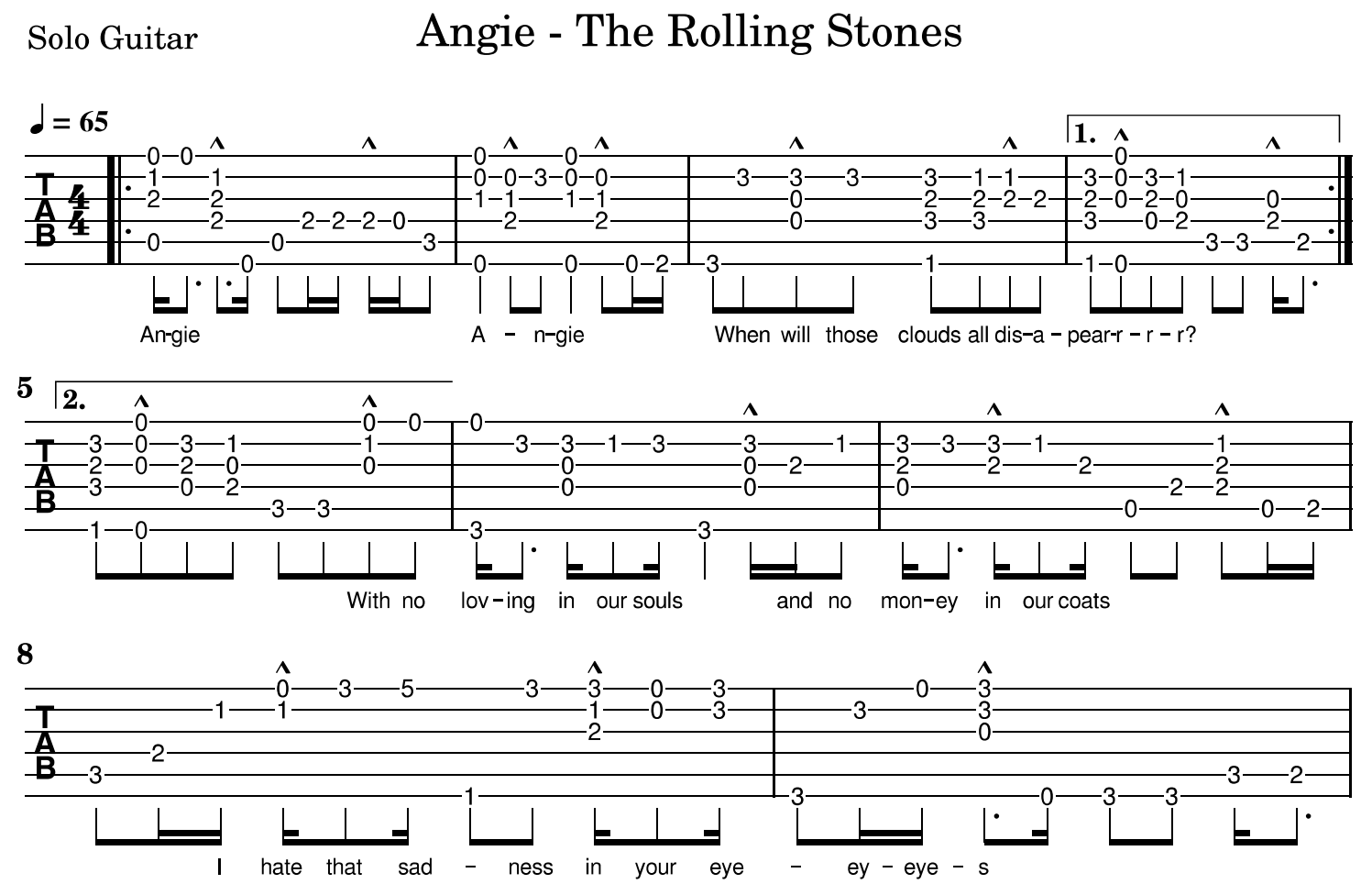
One of my 3 readers, Rich, inspired me to write about the right hand. It's a good call, because as far as the left hand goes, there isn't a lot of difference between a fingerpicker and a wailing one-note-at-a-time lead guitar shredder, but the difference between right hands is chalk compared with the proverbial cheese. Each fingerpicker will have his own take on the right hand, I'll try to stay open minded, but I only have one opinion, my own ;)
First up, you need to have accuracy. I was nearly going to say stability there, but accuracy doesn't have to come from stability everytime . Somewhere in our brains there is a 3D spacial awareness of self, and we have to tap deeply into that for all forms of guitaring. There are a couple of shortcuts - for example you can stare at your right hand. You can put your pinky on the soundboard. You can rest fingers on strings not in use. You can just have your arm resting on the guitar.
Each of these things creates a relative hand-to-string position and your brain can calculate the offset of what it is requested to do next. For example, consider a flat picker, he's just downstroked the G string, his next move is an upstroke is the B string. His brain controls the amount of movement, learned from experience, to perform the task. Do it enough and you'll never miss. It's only a short move afterall! It is possible to move to any string next - but the further away the more risk of an error.
If you are just fixing your relative position by your arm, you brian doesn't have a lot of reference feedback to go by - it's a long, error potential causing distance from where your arm rests on the guitar to where your hand is. If your pinky is on the soundboard your reference is much shorter and there is less error. For me I find resting pinky down as an anchor is awkward and detracts from playing, but that won't be the case for everyone. Pinky anchor at your own leisure.
We all look at our right hand from time to time, the visual cue is valuable position feedback for the brain. Playing staring at the right hand will also detract from playing, it's as if there is only a certain amount of CPU cycles available in your brain, and once you start using your eyes you have stolen a lot of CPU cycles that you could spend doing other more useful things, like looking and making contact with your audience ;) But a quick glance at the right hand to fix a reference point, especially when you are about to launch into a flurry of activity, is beneficial.
Three treble strings - three fingers; a thumb to move around the three bass stings. Sounds pretty sensible! And if you are playing a Travis picking style song, well, the right hand is basically dead still, the correct finger at the correct time moves to pluck the correct string, the thumb, which is a bit more manouverable than the fingers, can fairly easily jump between one or two strings plucking. If it is a repeating pattern, well that's even easier!
I'm not a big fan of Travis picking, it is a bit formuliac. It has its place, but you wouldn't want to play every song Travis picking style.
Same can be said for classical. Picking out a p-i-m-a-m-i (that's thumb-index-middle-annular(ring)-etc) is fairly standard fair for classical. Nice, use it all the time. Easy to play because your fingers are right there, relative positioning is almost a given. Can get repetitive if used excessively.
Let's look at Naudo. Throw the book out the window, he is playing every string with any finger and he's not just plucking, he's downstroke flicking, part strumming, holding his fingernail like a pick and lead-guiaring, he's slapping and whacking!
Well go and get your book back, a lot of this is based on the "normal" styles, but if comes down to accuracy, and how to get it. And that is helped by minimising reference errors.
Stability to start with will minimise reference errors. I use a classical style postion to get stability; that is, you have your wrist basically locked, your fingers pluck mostly from the second knuckle and your thumb is nearly stiff moving from the joint at your hand. A wise fella once told me if you think you are playing from your fingers you are probably playing from your hand, if you are playing from your hand you are probably playing from your wrist, wrist-elbow, elbow-shoulder. I'm still not quite sure what he meant, but I've taken away that if I essentially lock my hand and wrist in a fixed position then I'm probably playing from my fingers like I should be :)
My wrist is at quite a high angle, it doesn't need to be, I just find that is the most comfortable. If it doesn't hurt and it makes it easy to play, go with it.
So with a good stable right hand position, relative positioning of your fingers is less prone to errors. Playing top E and bottom E is always going to be easy, you have a wide margin for error, "start out wide and feel your way in".
What I see Naudo doing is keeping movement to a minimum. A heavy handed follow through on a single string leaves your fingers out there somewhere and can blow your reference to the next string, whereas a short effective stroke leaves you exactly where you know you are.
Classical players talk about rest stroke and free stroke. Rest stroke means that as you play a string, your finger follows through and comes to rest on the string next to the original string. This is of course a good method of keeping a reference, because rather than your hand floating you are physically touching a string, "reseting" in your brain the reference position (because you know which string you are resting on). This is very similar to pinky anchor or resting your not-in-use fingers on known strings.
I've gone off rest stroke over the years, it is all free stroke for me these days. I don't like the sound of rest stroke it is always heavily accentuated; I can get that if I need it from a hearty free stroke pluck.
But now let's throw in some flicking/strumming Naudo style in between songs - if that doesn't mess up your reference then a well grounded player you are ("Strumming" is moving more from the wrist or arm, "flicking" is just from the fingers, ie wrist more or less locked.) I've taught myself to flick chord pieces with all three fingers, kinda like a little chip or flick across the chord fragment I'm after. At first I played them fairly wide, strum style with wrist movement, but it creates the risk of reference loss. Most of the time after you have strummed a chord fragment the next note is a pluck in the melody, and by gee, you want to pluck the right note!
Looking at Naudo he adds flicks with only his second or third finger keeping his index finger ready at a target string, and the movement contains no wrist. It is minimalist, and reduces the risk of a missed note pluck. You extremely rarely see him miss a note; his stability and reference is rock solid so his accuracy is almost 100%.
The other trick he employs to further reduce risk is making sure the whole chord is formed. If you miss a note and hit something out of chord someone is going to notice. But if you miss a note, but the note you hit is in chord, it won't sound quite right but it won't sound wrong, if you know what I mean.
And there we come to probably the most critical point of all - what do you do when you make the mistake and pluck the wrong string? The brain has to quickly re-reference and get back on track. Hopefully the sound of the one wrong note is enough of a clue to the brain to say "I'm up a string too high" or "I'm down a string too low" and get your hand to take the corrective action. Alternatives include breaking out into a wide chord strum to fill your way through the bar and then pickup in the right place at the start of the next bar; or having a second attempt - many times in a melody if the note comes an off-beat late it could be construed as just adding a bit of lib. Of course a second attempt means breaking out of the picking pattern you are in; is it possible? I find these days the answer is a resounding yes; it is possible, just maybe, that I am heading toward true thumb independance...
Sorry my 3 readers, this has been a real brain dump, devoid of structure! There is so much to say about the right hand that I'd need to spend the time just planning a table of contents of what I have to say about it. But since this is a place of venting, ranting and rambling, that's all you are going to get for now :) I'm sure one of my three readers, you know who you are, will pipe up and steer this in a particular direction. This is a time that a forum would be useful!
For example, I didn't even mention fingernails...(but I have done in the past). Oh to bring all these things together in a coherent manner! ;)
JAW