After an email from Luke over at Korneff, I got thinking about my process of learning. He's got a lot of knowledge and wondered if I prefer lessons/courses in video or written. My initial reaction was "written" but it made me dig deeper and I realised I'm a terrible learner - slow, and scattered.
This is how it usually goes down:
I start a project. I quickly skim the internet for a few initial considerations and then I take it on, headlong. I fumble, experiment, slowly get stuff working. In the past when I'm stuck I would use a search engine and trawl through posts, these days the AIs do it for me. I eventually get what I needed/wanted in the project working.
If that's it, that's okay. But when a project continues, and I have to dig deeper in, I start to realise that how I have done it is not quite how a pro would do it, so I have to re-learn aspects, un-learn bad stuff, approach with better application.
It's usually at that stage where I say to myself "I should have taken the time to learn this properly from the start", shrug my shoulders, say to myself "too late now, just keep going." The reality is that it is never too late. And then I will also say to myself "Learning through experimentation can lead to great outcomes!" Again, mostly fooling myself. And even then, I irrationally believe myself.
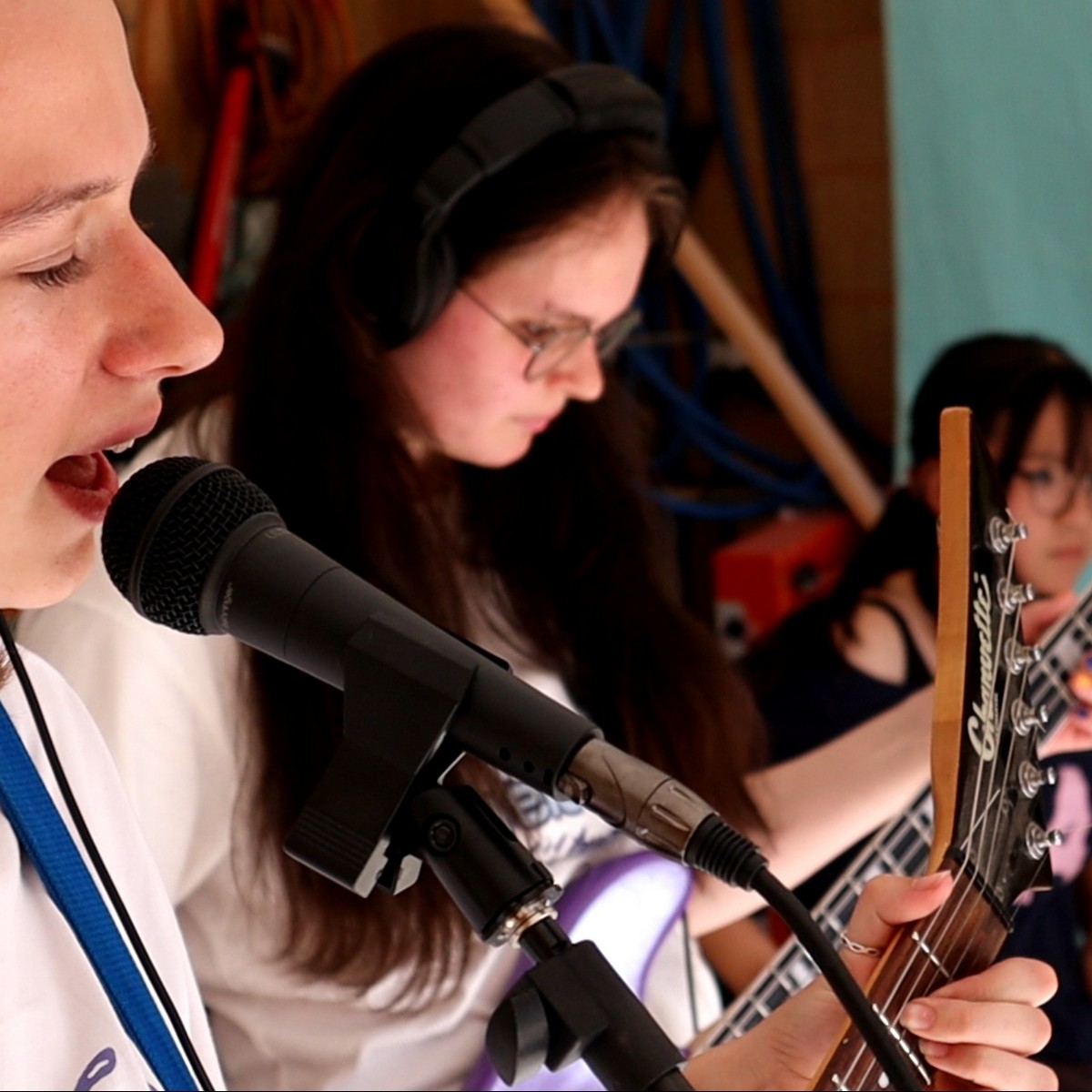
Case in point - last Thursday my daughter's band put on a garage concert. I have been amassing enough gear to put on a live show so I had what I needed, and I have recorded audio/video for a few concerts in my time, just because I like to document things, never because I needed to. I've never done a course in concert staging or recording, just winging it. In no particular order:
- I came into possession of a Yamaha DTX500 electronic drum kit, with cymbal upgrades and a few other features. Has a nice big amp with subwoofer, but I didn't want any of that...I wanted it to be a midi trigger for a VST drum. I've done that before, I like it and it's great to mix and keep under control. I had purchased SSD5 so I could have a kit that didn't just sound like every other backyard studio free SSD5 kit. I spent time trying to calibrate the triggers through the DTX500 box, time trying to balance the SSD setup. I had to map the midi triggers manually because the default maps I could find on the internet did not match. It came out okay. I don't know if I was pleased with the live levels, but it was okay.
- I also came into possession of two condensor mics and decided I wanted to record the crowd. I've experimented with ambience mics and I'm totally convinced they are essential for a live feel. I set it up so they would record through my audio interface, but were not in the output stream. In post this proved to be a winning move - my placement was good, they had good rejection of the main sound and yet picked up the audience. I didn't even need to isolate them - just having them faded in at the right level, great feel.
- I set up an in-ear rig a while back, it's just a 4 way splitter with a volume knob. It works great, they can hear themselves at whatever volume they like through the headphones. Comes straight out of the headphone output on the interface. I want to make it better though - I want to be able to give them personal mixes, so I can dial them in their own personal mix. The interface has 8 mono outs on the back, but the levels aren't right for headphones, so it would require a little bit of hardware. And to learn how to make an easy-to-use software resolve for each in ear mix.
- I've got one Behringer Eurolive B112D. It is a great PA. But I only have one. So I ran two cables to it (stereo left and right) into it's two inputs and ran the volumes at the same level. It easily filled the area, which was the garage out onto the driveway - with room to spare. No feedback even at neighbour annoying levels. But it was basically a mono signal on one side of the room. I need a second one for stereo balance. They are "only" $AUD450 in 2025, so I'll be getting another...
- Video cameras. I have two quite old Canon EOS M but they take a great 1080p video. I have a slightly newer version as well, so my usual setup for this type of thing is the two old ones on tripods in fixed positions. I would have liked one high up in the middle but that's where the crowd was so I settled for one up high looking down on one side and one down low looking up ont eh other side. They gave me all of 3 minutes before the show started to set them up so I didn't manage to frame them well, and within a minute of the concert starting someone stood in front of one. Not great. I used the other video as a roving camera. So when I later did a video edit my two stationary/stable feeds were mediocre. I accepted it and edited anyway, the result was still okay. Note, the "easiest" way to film and edit a live concert is to have a guaranteed stable camera or two, try not to walk your roving camera into the frame of both too much, make sure that all cameras are rolling the whole time so they are easy to sync, lay the feeds out in your favourite editor target the roving camera as priority for interest and when the roving camera is a mess fall back to the two stable cameras. I only spent maybe 2-3x realtime editing it, so maybe and hour and a half
- I worked out why old Canon DSLR cameras will only let your record video for 30mins max before they shut off. It was some tax issue - that any camera that can record more than a 30 minute video had higher tax at the time, so they baked in 30 minutes max to the firmware to bring the cost down. How stupid. So if your concert is more than 30 minutes make sure you press stop and press start again within the 30 minutes on each camera...and not all at the same time :-)
- I need to relax with my pre-gain thresholds. My sound check setting I was twisting the gains so high that I was getting hardware clipping. And it was making crackling sounds. Bad. It's a 24 bit interface, I can afford to throw away the first 4 or so bits. I should be able to see the signal as it comes in, but it doesn't need to get close to filling the available bits. And once the pre-gain is set, I should leave those dials alone. Use Reaper's faders.
- When I did a quick and dirty post mix, I added my usual compressors and EQ and saturation and reverb on the vocals and instruments. I did very little automation. Which means that I should set up all those fx for the actual live performance...
I think you are getting the idea. I learn through experimentation and then read up on what I don't understand. It's burnt into me, I don't think I can learn in a structured manner anymore. It's been a long time since I was at Uni, I don't learn like that anymore.
So Luke, dunno mate, dunno.
For the curious, here is the video I made
