Saturday, 31 December 2022

New years eve noodle!

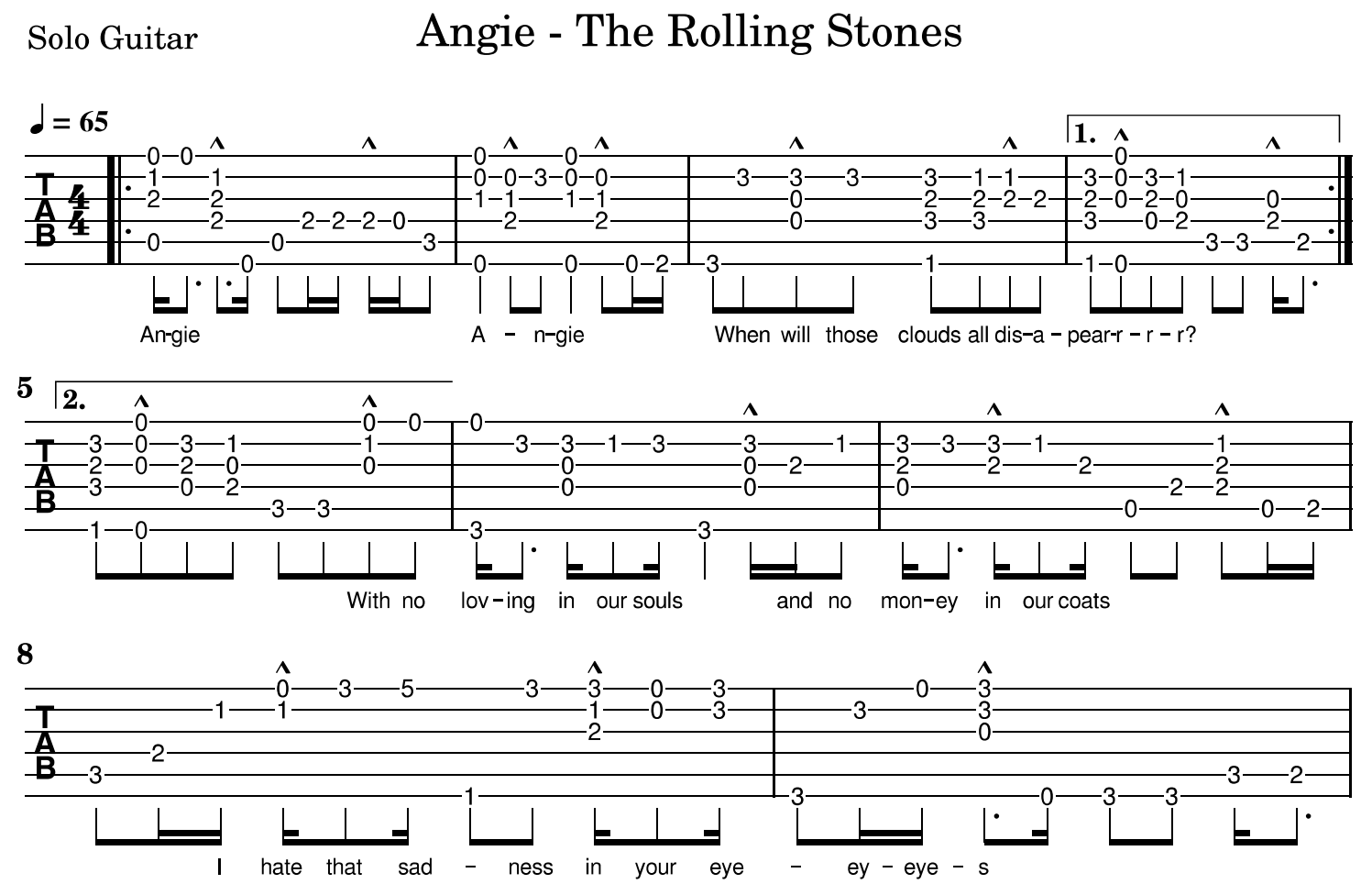
Ah, seeing Naudo post this old classic again made me get out my guitar and noodle: Naudo Angie

I wrote down some of the notes I was hearing, and added some extras I wanted to hear, but left out some that I couldn't hear... or play.  Here's some scribble, I'm not sure if I will take this on, so I'm posting this just in case I don't!

Tuesday, 27 December 2022

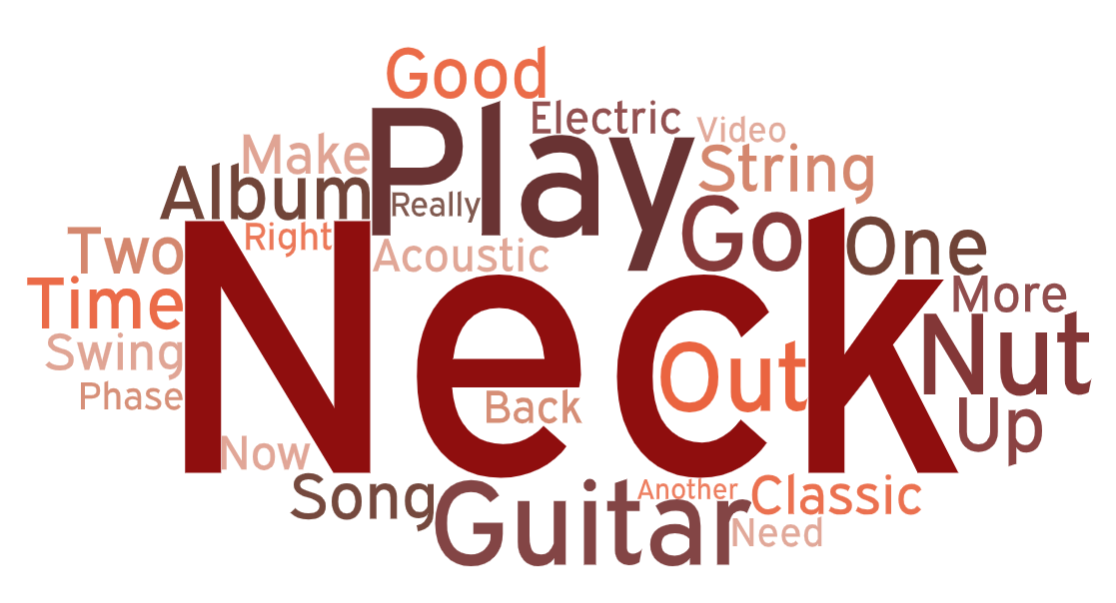
Jawmunji word cloud 2022

I haven't done a word cloud for ages, let's look at one generated by https://wordart.com/create for my 2022 posts!

The big stand out words come from the work I did on guitar necks and nuts this year. 

"Album" features because of a huge article I wrote - and have edited numerous times - about the albums that have influenced me.

My article on swing made it no surprise that the word "swing" got a high rating.  Yah to swing!

"Play" and "guitar" - I'd be disappointed if they weren't there. I was happy to see the word "just" didn't crack a mention. I just say "just" just too much!

Yep, it all sounds like me.  "Good Play Go!"  "Make Album Right!"  "One More Nut!"  "Now Song Guitar Another Classic Need!"

JAW

Saturday, 24 December 2022

Every Stalk You Make

A few weeks back I discussed my lunchtime office playing with a work mate, and mentioned that I had a stalker - someone who I'd seen a few times, sitting in a booth at the very back mostly hidden, never saying anything.  He asked if I played any stacker songs.  I immediately thought "Every Breath You Take", but as the internet shows there have been quite a few stalker songs written.  And then The Algorithm got me - when I next looked at my Youtube feed up came Gabriella's recent version of "Any Breath You Take".  She played it in a style similar to how I would play it, so I picked up the guitar and had a crack.

I started on a G chord which was what I heard in my head. The chord progression turned out to be the basic doo-wap (Stand By Me chord progression) so G - Em - C - D. But wait! There are super tasty 2nd intervals in there, which come through loud and clear in the studio recording guitar riff.  My understanding is we refer to them a Major Ninths - I guess if you played a G with the A two semitones up it would sound bad, but if you play the G and the A an octave + two semitones up it sounds delicious. What made me even happier with that is the Em becomes Em add 9 which is The Pink Floyd Chord, the first chord on the Dark Side of the Moon Album. Happy days!

When I looked back at Gabriella's version, I noticed she started on A.  Ah, interesting. I then looked it up and the actual song starts on Ab.  Too late, I had my heart set on G so I could play The Pink Floyd Chord :-) I didn't look at Gabriella's version again, but thanks for inspiring me Gabby!

It took under a week to arrange it "JAW style" learn it and memorise it, it is now in my Friday rotation, ready for any stalkers I might have. "Oh that beautiful wedding song!" "You mean that creepy stalker song?"

I really need to record some songs for you all don't I.  Tell you what, for now, grab your guitar and play the intro as a primer:

JAW

Thanks to https://www.htmlwasher.com/ for having a html cleaner that thinks the same as I do. I probably should stop writing in html but it's hard to teach an old dog new tricks.

Thanks also to https://www.hooktheory.com/ for some interesting and well laid out insights into this song!

Sunday, 13 November 2022

Bass Nut


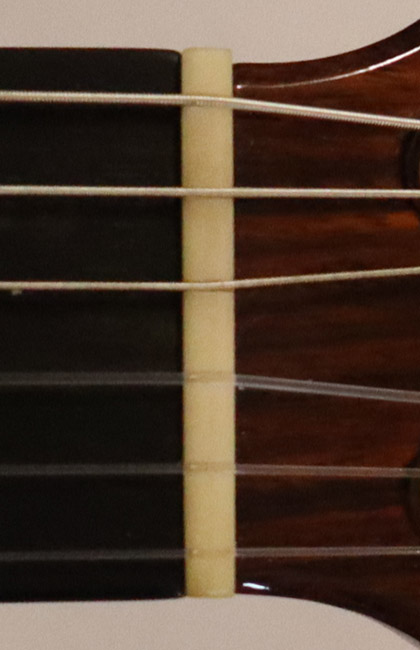
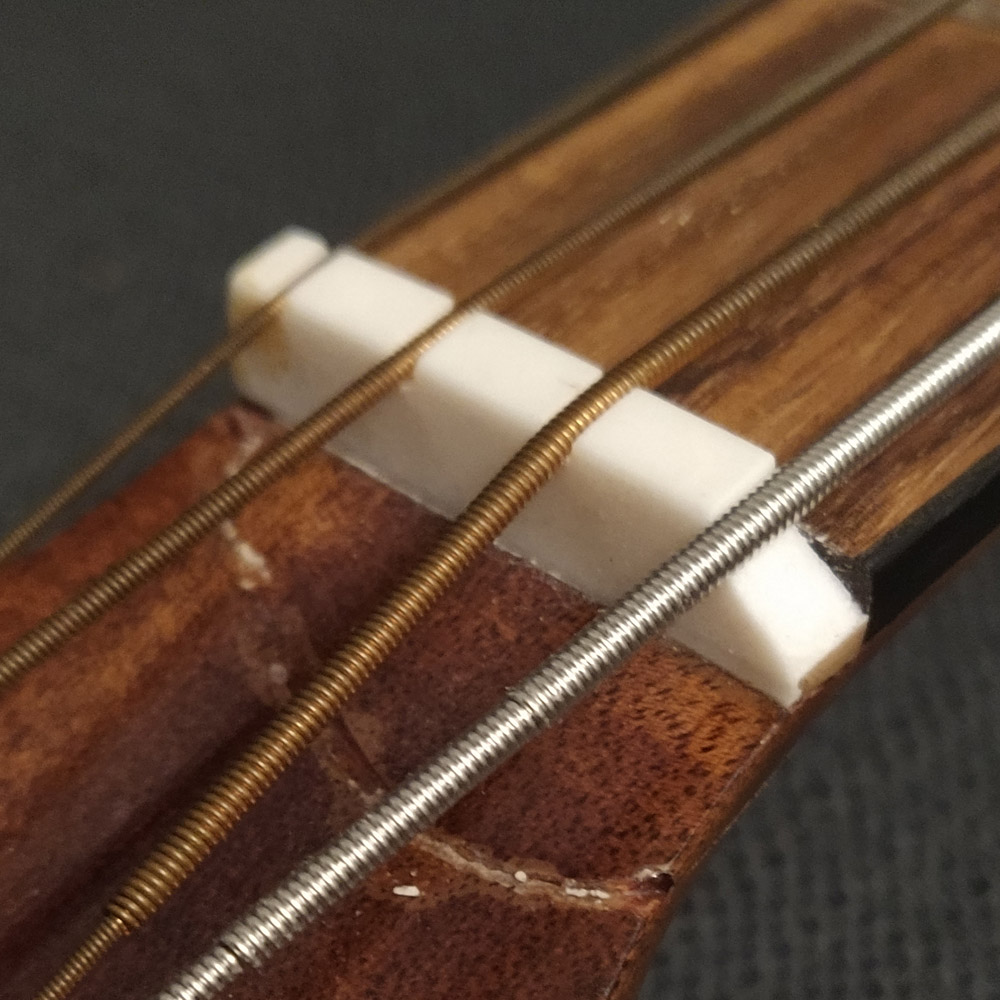
Broken nut

The school where I repair guitars has an acoustic bass, and somehow the nut was cracked. I don't know how you crack a nut, but the various guitar damage I have repaired over the years nothing surprises me anymore. In fact a few years ago the headstock on this acoustic bass was clean broken off. I wasn't game to fix that so it was professionally reattached, you can still see a bit of the scar in the photos. The repair on the back of the neck - where it counts - is smooth as, so good job whoever you are.

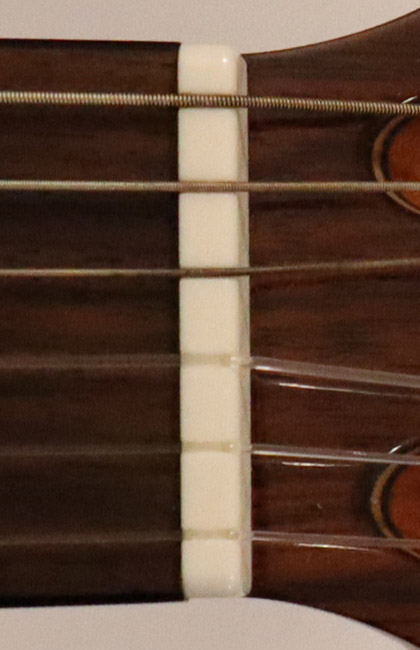
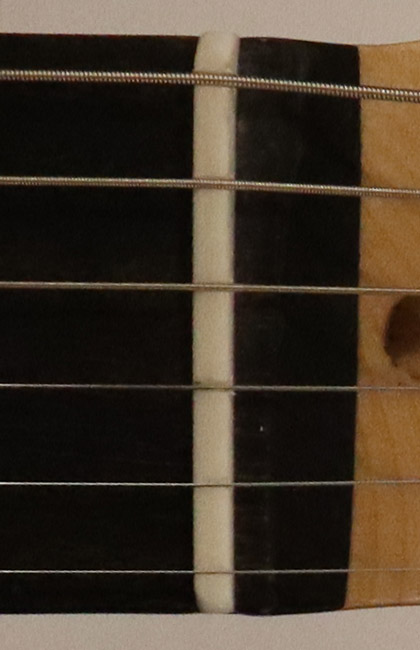
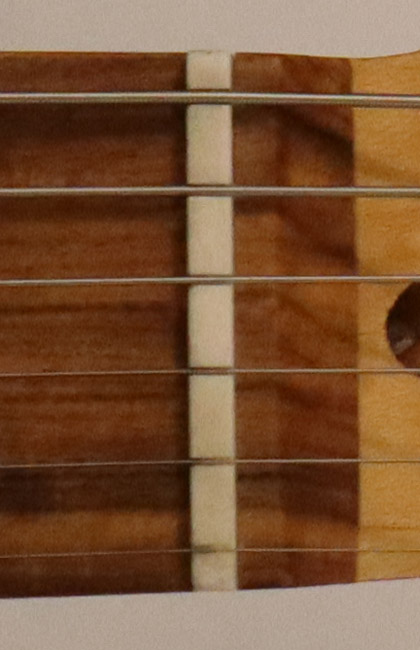
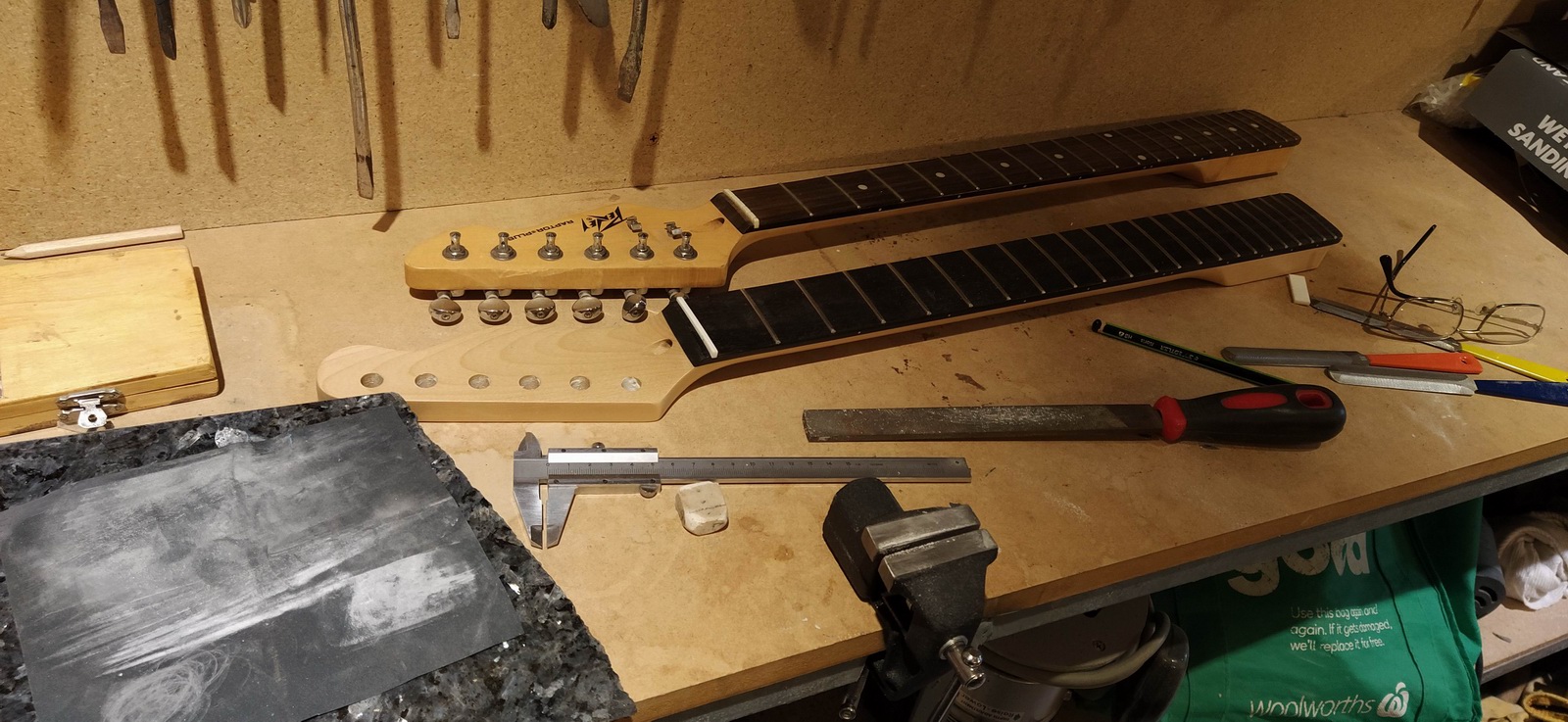
Since I had recently made a nut for my custom electric (I still need to remake that nut) I was in the nut making zone. I had already stocked up on bone blanks for nuts and saddles (they are cheap from Aliexpress), and I had one that was the right thickness it just needed to be cut down in width and the height made to match the fretboard curve. Once I had chiselled out the old nut, I cleaned the glue from the nut slot with a small file. I have an inexpensive set of jewellers files, it comes in handy.
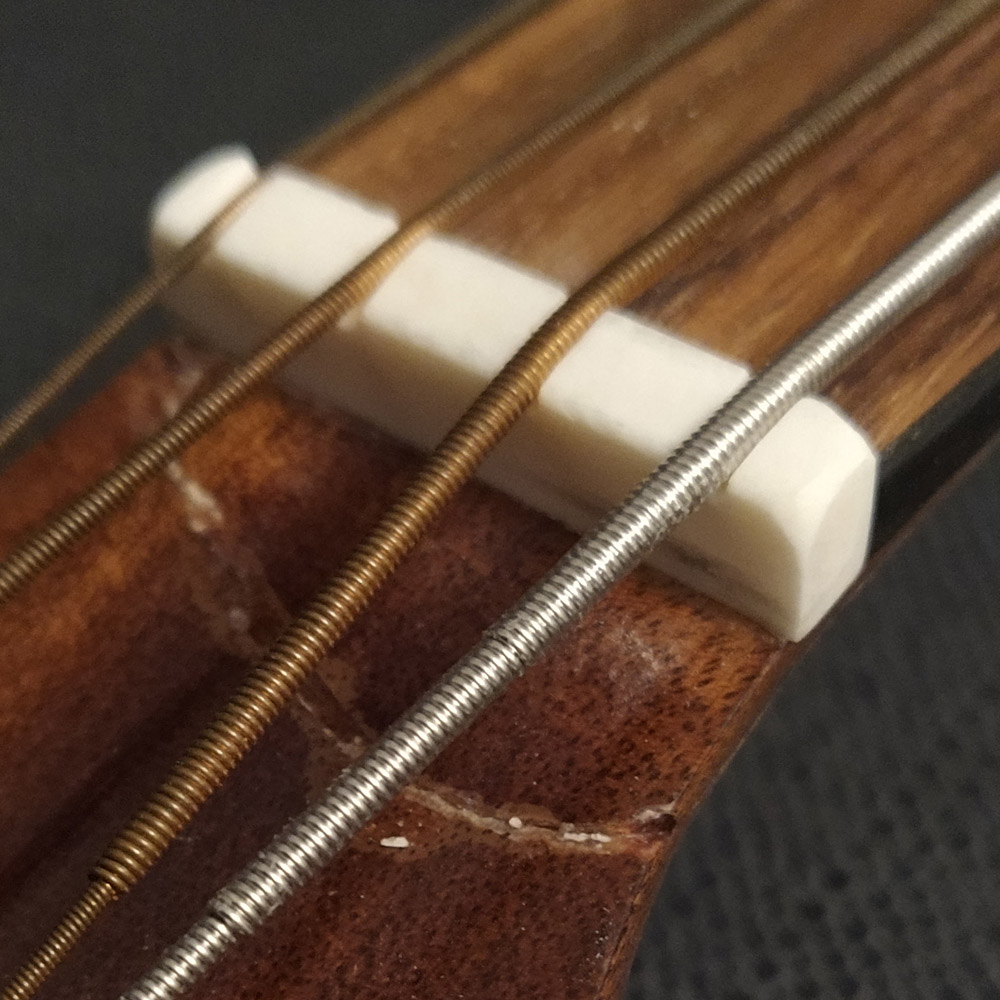

New remade nut

I use a cheap hobby vice to hold the nut while I file it, and I have a small piece of super flat marble stone for putting sheets of sandpaper on to get those perfectly flat edges. A good trick I saw on the internet for when you have something thin and you are trying to get the thin edge to 90° and flat - put another object with a perfect 90° edge on and run your thin edge piece back and forth on the sandpaper along the side of it.

Because bass strings are so fat, even the thickest guitar nut slot file I have is too thin...the jewellers files came in hand for that again. I based my nut spacing on the old nut which was already pretty good. I set the depth with the tap test - if you fret the 3rd and then tap on the string at the first fret there should be the tiniest gap, just enough to get a 'plink' as you tap. This makes a lot of sense to me - the string height at the nut should basically be the same as if there was another fret behind. If the string height is too high then you are bending the string too much when you fret the first, and you will hear that in the intonation, the open string will be in tune but the first fret will be sharp. I find I get this anyway, I fret too hard, so I'm pushing the string too far into the fret which sharpens it. It's nice however when you have the string height at the nut as low as possible to begin with.

If you file the slot too low, then the string is going to buzz on the first fret. That's not good. This what naturally happened to my main classical, after years of tuning - pulling the strings through the slots - they are actually worn down too far, and the open string buzzes.

Even with the nut slots as low as I could take them, this bass guitar is still pretty awful to play, the action is so high! I filed down the saddle which improved it but not enough. I adjusted the truss rod -  to the point the top string was starting to buzz a little and then backed it off a turn or two. The truss rod is only really for adjusting the neck relief not action, even though it does affect action. What the real problem with that guitar is - the neck angle.

To be honest, almost every guitar I come across that is more than say 20 years old has a slightly wrong neck angle. This makes sense - wood is not a dead piece of spring steel - over time , under constant force, wood is going to give a little. The physics of the situation is that most of the force is in the plane of the neck - so not pulling up - but there is enough force there for something to give over time. The give seems to be on the soundboard, which also makes sense. You end up having a very slight caving in deflection of the sound board between the neck and the sound hole. Guitar makers don't make a soundboard so rigid it will resist deflecting in - that would spoil the tone.

So, I would say most 20+ year old guitars need a neck reset. Basically detach the neck, cut some meat/new angle out of the heel, reattach. I've seen formulas on the internet for calculating the amount to remove, usually ends up being a millimetre or two. Once you glue it back on - the soundboard caving in/etc is still there - but now the neck is compensated for it. And you are back to blissful action again!

Generally the lower the action - given that there are no buzzes anywhere - the more playable the guitar is. You don't have to take you fretting fingers off and on so far as you refret. It's just a nicer experience. It feels like the guitar is working with you instead of against you. Even my main classical's action is starting to get a teensy bit high. It is a 2002 model, so that fits my 20+ theory. For now I'm going to stick with lower tension strings for a while.

But my oldest classical from the late 70's is quite far gone. I'd like to adjust it. I've seen an interesting hack where you cut through the heel with a thin saw, and then reglue and clamp the cut. You won't get the same perfect mating surface when you bend the heel in, so it will need to be the right type of glue to hold and fill, but the neck angle will have been readjusted. Maybe I'll buy an old cheap classical and practise on that first :-)
Saturday, 15 October 2022

String spacing


Classical
Nut width: 52.5mm
High E: 3.8mm
Low E: 4.6mm

Hybrid Nylon
Nut width: 47.7mm
High E: 4.8mm
Low E: 5.1mm

Acoustic
Nut width: 44.4mm
High E: 3.0mm
Low E: 2.7mm

Strat Copy
Nut width: 48.0mm
High E: 3.0mm
Low E: 3.6mm

Tele Copy
Nut width: 43.0mm
High E: 3.1mm
Low E: 3.4mm

Electric
Nut width: 41.9mm
High E: 3.1mm
Low E: 3.3mm

So after cutting a nut for the custom neck on the Strat Copy, and then played a tune I realised I didn't like the nut I had cut. The string heights were bad on the bass notes, so it sounds out of tune - which can be fixed -  but what I didn't like was the string spacing. The top E was too close to the side of the neck. I had cut it to a fairly general specification - 3.0mm - but it wasn't working for me.

To find out why, I thought I would measure up the guitars I own, and how much I like or don't like their string spacing.

Quick note - the spacing is from the edge of the fretboard to the edge of the string, not to the centreline of the string.

I had hoped it was simply a "this is the distance that feels good" but it isn't.  It is a combination of several things, definitely the string gauge (nylon is much thicker than than steel for trebles!) probably string height off fretboard, probably neck radius, but other more subtle things like the radius of the front side edges of fretboard would make a difference.

It was a good exercise to measure though:

  • Classical is okay, the low E could be a tad closer to the edge and I'd be fine with that.
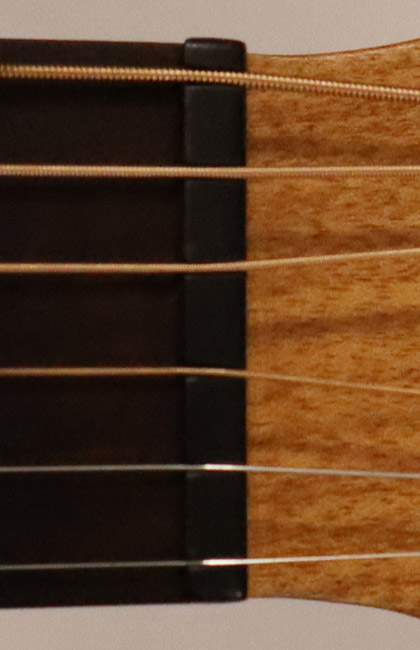
  • Hybrid Nylon is yuck! This exercise showed my why I stopped playing it years ago - the string spacing is gross!  You can even see it in the picture long before you take a measurement, both E's are too far away from the edge of the fretboard, which crams the strings up together.  I reckon if I cut another nut for this, it will completely change the way this guitar feels.
  • Acoustic is okay.  I reckon I could use a tiny bit more space from the side on the high E.  Surprisingly the very close low E string works out fine, especially when you are thumb fretting the bass. The advantage of a close distance to the edge of the fretboard means more distance available in string spacing, so you don't feel so cramped.
  • Strat Copy the high E is too close, low E is fine.
  • Tele Copy is fine, but the whole thing is too cramped with only a 43.0mm neck.
  • Electric is fine, but even more cramped than the Tele Copy.

So what do I think?  I'm estimating for a steel string (electric or acoustic) I would go with a 46mm neck, the high E at 3.5mm spacing, the low E at 3.0mm.  For a nylon, I'm estimating a 50mm neck with the high E at 3.5mm and the low E at 3.5mm.

This sure reinforces that the best way to know what you like is to play many guitars - I mean look at the differences in these string spacings I found! What suits me might not suit you - there is probably a cut for everyone - for instance somebody out there thought my hybrid nylon spacing was a good idea!

(Thinks wistfully about the $AUD4k Cole Clarke acoustic at Kosmic Music a few months back that just played so easily and beautifully - that must had the perfect string spacing for me.)

JAW

Monday, 26 September 2022

Custom Neck Installed

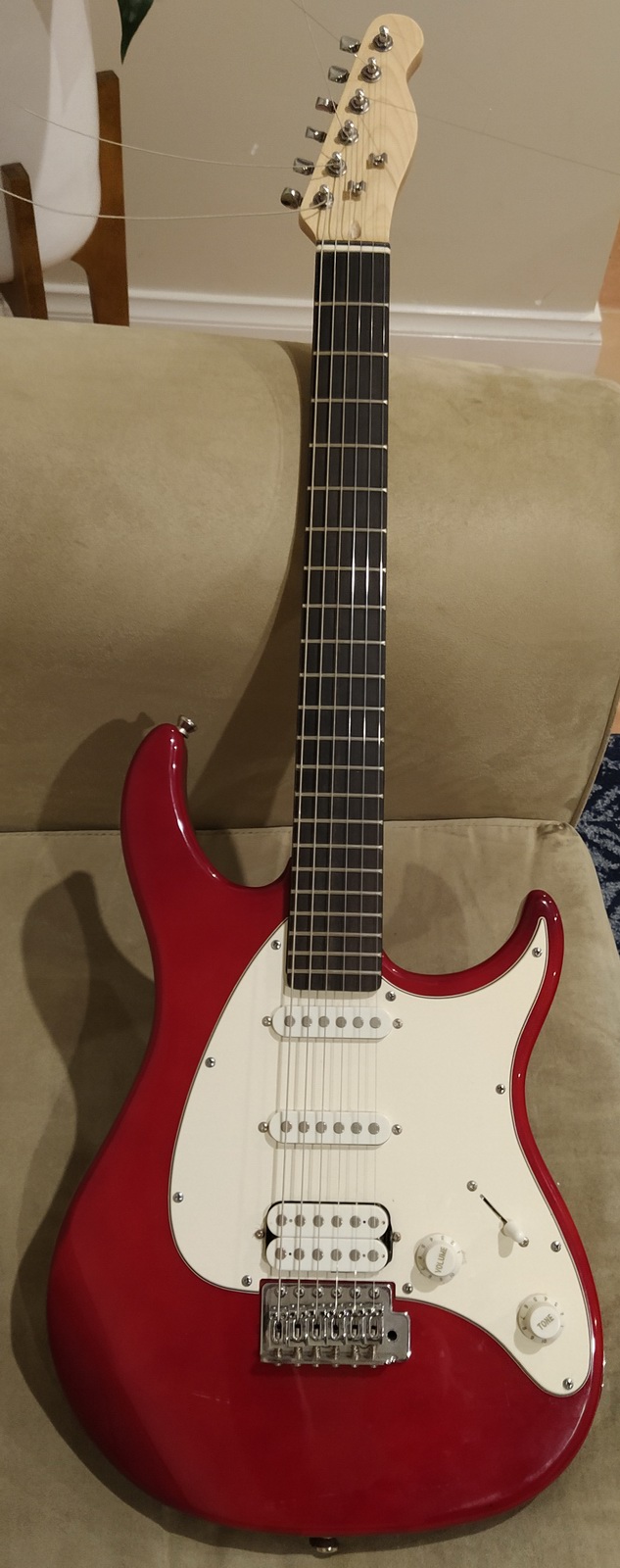
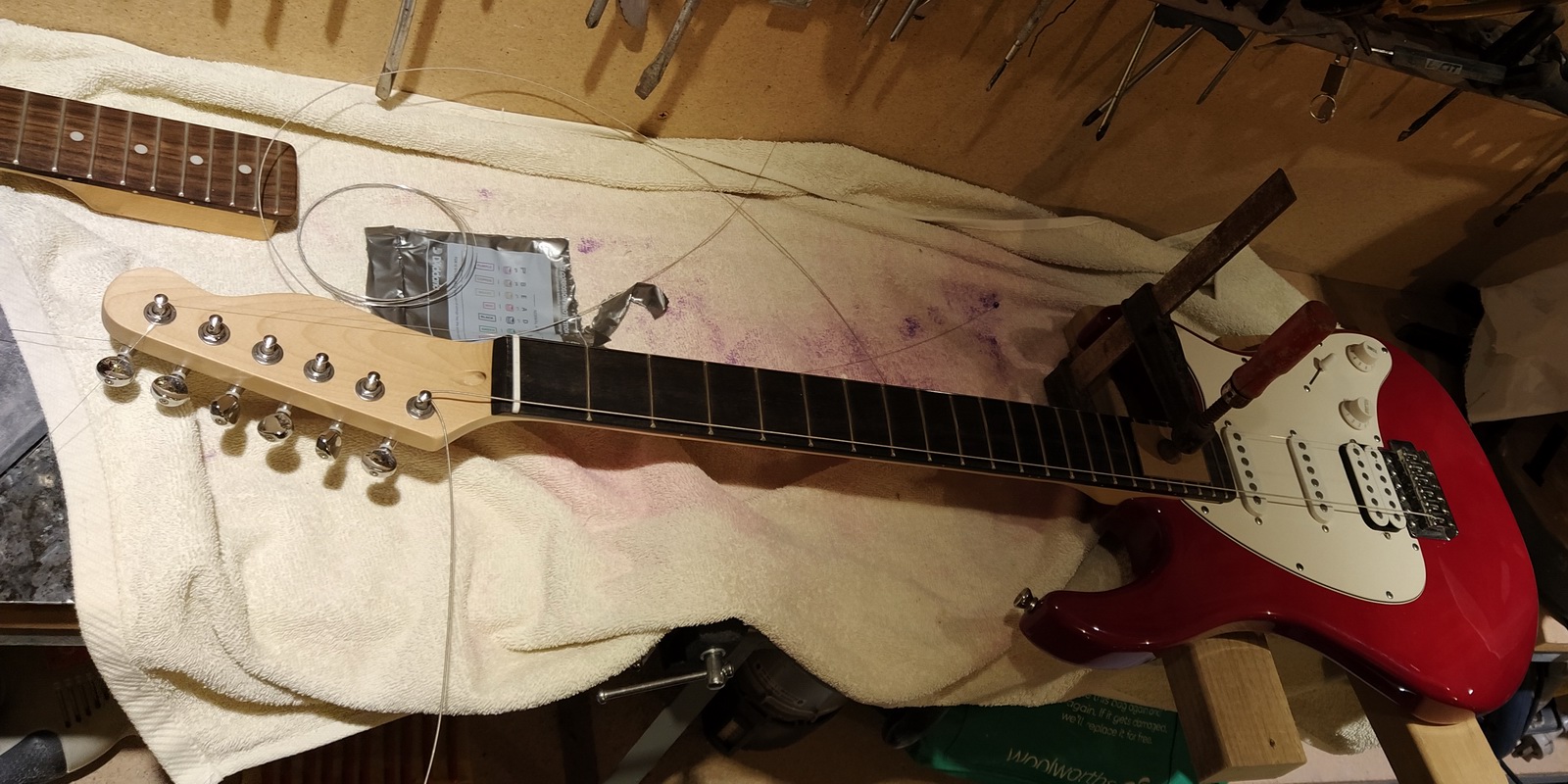
It finally happened, but not what I had planned... Back in March I bought an electric guitar, and then ordered a custom neck which arrived in May at which time I realised I had accidentally specified a Strat neck pocket instead of a Tele neck pocket.  While I _could_ have made it fit, I sat on my hands for a few months agonising over it, and then eventually snapped and bought a cheap second hand Strat copy from the pawn shop and installed the neck on that.

It's been an interesting exercise, I've learnt a lot.  Here is some of it!

Thanks again Leo Fender for standardising bolt on necks. The Strat copy I bought is the same neck as a real Strat and the same as what a bloke in China made with his bare hands. So it fits just fine. Fair enough, you changed the design between Strats (overhanding fretboard in the neck pocket) and Teles (flat ended in the neck pocket) to get an extra fret, but that really threw me!


Looks pretty! I like the classical guitar
fretboard and the overall simple clean lines

Handmaking the nut is not complicated, but it is tedious.  There are numerous tutorials on the interwebs so I don't need to write it up here, but I am going to talk more about spring spacing in another blog. By the time I had finished the nut I was already dissatisfied with it and I will be re-making it, but it will do for now. Shout out to Mr Manchester for his handy spacing calculator. When I make my next better one I will talk about it some more then.

Aligning the neck is nerve wracking.  Clamp the neck into the pocket, put on both E strings and then rotate it until the neck is square.  Then drill!  I reckon I was pretty close - I won't need to fill the holes and do it again.

Something as simple as drilling tiny screw holes to hold the machine heads in place.  This seems so obvious in hindsight - but screw on the machine heads first, wiggle them so they are perfectly lined up, then screw the little holes to lock them in place so they don't rotate. Not before! Streuth, I don't know what I was thinking - I was rushing it.

Enough talk about the build! What is it like to play? How does it sound?

Ha ha - I don't know yet!  I think I like it! I think I don't like it! I am going to remake the nut because the intonation for the low E is awful - the action is too high - and the top E needs to come in, it's too close to the edge of the fretboard.

But it sounds like an electric guitar, so I took a moment to record something electric guitarish:

A shout out to my Patreons who help fund projects like this, and keep me supplied with fresh guitar strings 👍

Friday, 23 September 2022

Musescore Swings!

"If you gotta ask, you'll never know" - an old response to "What is swing?"

My hands found swing a long time ago - my brain had no idea what they were doing, but it sure felt groovy.

So when I started tackling arrangements with swing, I just couldn't get down what I was playing. I generally left the swing out with an instruction "just listen and play it like that". Occasionally the swing was so prominent and important I had to put it in the sheet. For example in 2019 I attempted to write out "Gold" by John Stewart as swung and got this:

Which I quickly abandoned because "something just isn't right, and wow, that's hard to type in."

But it's actually a good insight into how swing is notated - that above is text book "shuffle" - so I discovered. Secret let out - swing is delayed offbeats. Forcing the notation into triplets like I did above is a hard shuffle where the normal offbeat (the "and" note between main beats) is pushed out from 1/2 of the way to 2/3 of the way to the next note.

So when I recently took on "Horse With No Name" I once again came up against how to get that swing feel into Musescore. Because when I played the song I realised that my hands were playing swing. (How do they do that? How do they know when something swings, and when something doesn't? See opening sentence.)

So in my frustration I googled "Musescore swing". And what do you know, it's been there all this time! Musescore for the win!

In Musescore version 3, you actually just add text to a note, and that brings up a properties option, and in this case you can set the swing options. In version 4 it's right there in Format->Style->Score. And the people who write the Musescore software are clearly music geniuses - there is a percentage setting for the swing delay, so 50% means the offbeat note is "where it should be" out to 100% meaning the offbeat note is actually on the next beat (ha ha - let's call that "ultimate swing").

But let's not just talk about it, let's see it in action! Here are the first 4 bars "straight" to begin with and then "swing" at 60%, which feels about right.

Look, this is big improvement, but it is a strict rigid swing. I can hear that my hands actually vary the swing per offbeat as they go - for instance, "the" in "all the life" doesn't quite sound right in the above. I experimented with the swing setting after I did this, and discovered my hands actually swing "the" around 65% rather than 60%.

At least half of my arrangements need swing turned on I reckon - the text "Swing" at the top, and then when it plays back you hear the delayed offbeats.

"If you gotta ask, you'll never know" - but now we know, and luckily you never asked 🙂

JAW